

What does calm actually look like in a dog?
Teaching your dog to be calm is one of the most valuable, and most overlooked, skills you can build together, especially for puppies and dogs who get overwhelmed in exciting or unfamiliar environments. Calm doesn’t come naturally to most dogs; it’s a learned life skill, much like sit or recall, and it can be taught gently using fear-free methods that meet your dog’s needs rather than fight against them. This article explains what real calm looks like, how it differs from a fearful shutdown and practical exercises you can start using at home today.
Calm is something most people want from their pet dog, yet very few realise it is something that needs to be taught. We often focus on teaching sit, stay or a recall, but calmness, especially in new and exciting environments, can be really valuable. In this article, we will focus on what calm looks like, how to reinforce it and when it might not be fair or appropriate to expect it.
How can you tell the difference between calm and shutdown?
Some dogs, when placed in circumstances where they feel uncomfortable, may shut down and this can be easily mistaken for calm. Not all dogs are outwardly reactive when faced with something they fear or are triggered by. Some suppress those feelings and instead may be too scared to move.
This is why it is important to know what worries your dog and to avoid those triggers until you have worked on changing their underlying emotional response. Don’t only rely on their stillness to read the situation. Look closely at their body language and pay attention to their response to food, toys and your voice.
Meeting your dog's needs before expecting calm
Their environment can be very stimulating and too much excitement, overstimulation and inadequate rest can quickly turn them into bundles of chaos. In these moments, owners can often become frustrated with this behaviour, but their dog isn’t being intentionally difficult. More often than not, they just haven’t been taught to cope.
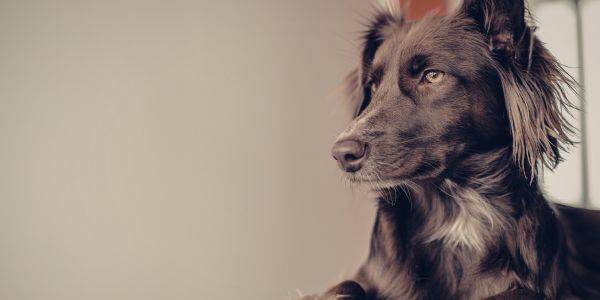
We cannot expect a dog to be calm if they have not had mental or physical stimulation, have not had the opportunity to toilet, eat and drink, sniff or any other breed-specific outlets. Asking them to be calm goes against everything they are feeling, especially if they are full of energy, with unmet needs. We are ultimately setting them up to fail. If you plan on taking your pup to a cafe and want them to sit quietly while you sip your coffee, make sure they have had a chance to run, play, sniff and toilet first.
Why environmental management matters
Do not expose your dog to environments or situations they are not yet able to handle. For example, if your dog is super excited by visitors, it is unrealistic to expect them to be calm when you are hosting a braai. Calm will need to be practiced first in less stimulating situations and built up gradually as your dog succeeds. In the meantime, give your dog somewhere quiet to settle away from people and watch their body language closely so you can step in if they become overstimulated. It is also important to consider your dog’s age, breed and individual personality. Puppies become overstimulated very easily. They also become overtired and this can all lead to less calm and more chaos.
Puppies need lots of sleep, so don’t take them out to new places for long. Some breeds may also find certain environments more challenging than others, particularly busy, noisy settings.
How do you teach a dog to be calm?
One of the simplest is to capture and reward moments of calm as they happen. If your dog chooses to settle down, you can go over and reward them where they are.
We can also build calm using context clues and repetition. In our puppy classes, we use small bath mats to teach the puppies to settle in a group environment. While the humans chat, the pups are encouraged to sit or lie down on their mats and treats are placed on the mat to reinforce staying there. With regular practice, the mat becomes a cue for calmness. The puppies learn that being on the mat means relaxing quietly, even while surrounded by other dogs, people and activity. Once the skill is well established, the mat can be used in other environments to help them settle there as well.

Capturing and rewarding moments of calm
Initiate a play session with your dog, then after 30 seconds pause the game, ask your dog to lie down and reward with food, before initiating play again. This increase and decrease in activity, going from arousal to relaxation, gives good practice at calming themselves after excitement. They are practicing emotional regulation while having fun.
Once the dog is doing well there, gradually introduce distractions and new environments. Be realistic with your expectations. If your dog is struggling to remain calm in a situation, take a step back, give them a break and evaluate how you can change the environment, lower the difficulty and reduce the triggers to make it easier for them next time. Your dog’s so-called ‘misbehaviour’ is actually clear communication of what they can and cannot cope with at that time.
We often expect dogs to understand our social cues and to know when we want them to be calm and ‘well-behaved’. In reality, these are learned life skills, not something they are born knowing.
By teaching calmness, we can provide them with some clarity in social settings, which helps build their confidence and makes life easier for everyone.
You will find the article in the April 2026 Magazine. READ IT HERE
DISCLAIMER:This article is for general educational purposes and is not a substitute for individualised advice from a qualified veterinarian or accredited animal behaviourist. If your dog shows signs of fear, anxiety or shutdown, please consult a vet or qualified behaviourist for a tailored plan.

FAQ Section
Q: How do I teach my dog to be calm?
A: Start by meeting your dog’s basic needs, exercise, enrichment, toileting and rest, since an unmet need makes calm impossible. Then reward moments of calm as they happen, use tools like a mat to create a settle cue and practise moving from excited to calm through short play-and-settle sessions, gradually increasing difficulty as your dog succeeds.
Q: Why is my dog never calm?
A: Most dogs, especially puppies, aren’t naturally calm because it’s a learned skill rather than an instinct. Overstimulation, inadequate rest, or unmet physical and mental needs can leave a dog too wound up to settle. It’s rarely intentional misbehaviour; it usually means your dog hasn’t yet been taught how to cope.
Q: What is the difference between a calm dog and a shut down dog?
A: A calm dog is relaxed and responsive, still interested in food, toys and your voice. A shut down dog may look still or quiet too, but this stillness often comes from fear rather than relaxation, and the dog may be too overwhelmed to respond normally. Watching body language closely helps tell the two apart.
Q: How can I calm my dog down when visitors arrive?
A: Build up gradually rather than expecting instant calm in an exciting situation. Practise calm in low-distraction settings first, give your dog a quiet space to settle away from the action, and only introduce visitors or busy events like a braai once your dog can manage smaller versions of that excitement.
Q: At what age can I start teaching my dog to be calm?
A: You can begin teaching calm from puppyhood, though it’s helpful to remember puppies overstimulate and tire easily, so keep early sessions short and low-key. Calmness training is a gradual, ongoing process that can start early and continue to be reinforced throughout your dog’s life.

At Oday Vets, we’re more than just a specialist veterinary clinic, we’re a family-run business in Centurion, Gauteng, passionate about providing exceptional, personalised care for every animal we meet. Our team is led by a veterinary ophthalmologist, and a vet nurse, and certified animal behaviourist, working together to ensure your pet receives expert medical care, behavioural support and products we’d use with our own pets. Whether you’re based in Centurion, across Gauteng, or further afield, your pet’s wellbeing is our family’s mission.