
Bone Broth for Dogs
Bone broth for dogs comes in three genuinely different formats: liquid, powder and multi-ingredient blends and picking the right one depends on what you’re actually trying to achieve for your dog, not which brand has the best marketing. This guide compares all three, covers safe serving sizes and looks at what bone broth realistically costs in South Africa, so you can choose with confidence rather than guesswork.
Walk through any pet store or scroll through a pet supplement site and you’ll find bone broth in almost every form imaginable: frozen liquid, shelf-stable powder, concentrated gravy toppers, even freeze-dried cubes. The marketing language tends to sound similar across all of them: “ancient recipe,” “nutrient-dense superfood,” “natural source of glucosamine and chondroitin.” But these products are often nutritionally quite different from one another and they tend to serve different purposes too. The right choice depends less on which brand has the best story and more on what you’re actually trying to achieve for your dog.
Here’s a practical guide to what bone broth is, the main formats it comes in, roughly what it costs in South Africa and how to read a label so you’re not relying on marketing copy alone.
What bone broth actually is
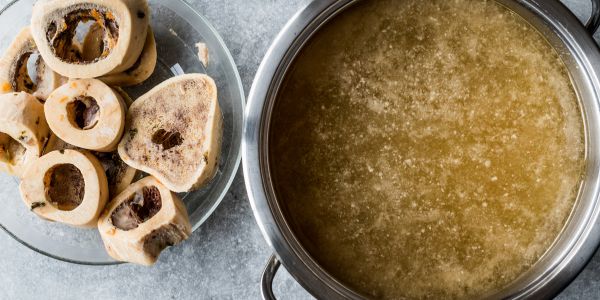
At its simplest, bone broth is made by simmering animal bones and connective tissue (and sometimes some meat) in water for an extended period, often 24 to 48 hours for a traditional preparation. The slow cook breaks down collagen, the protein that gives bones, cartilage and connective tissue their structure, into gelatin and draws minerals, amino acids (the building blocks of protein) and small amounts of naturally occurring compounds like glucosamine and chondroitin out of the joint tissue.
The result is a liquid containing:
- Gelatin/collagen protein: the same structural protein found in skin, joints and the lining of the gut, so it’s a natural fit for supporting all three.
- Amino acids: particularly glycine and glutamine. These have been studied for their role in supporting the gut’s protective lining, though most of that research is in humans and lab animals rather than dogs specifically.
- Minerals: calcium, phosphorus, magnesium and trace minerals, in amounts that vary depending on the bones used.
- Small, naturally occurring amounts of glucosamine and chondroitin: compounds involved in cartilage health, released from the connective tissue during cooking.
That last point is worth sitting with, because it’s the one most commonly oversold. Naturally occurring joint compounds in broth exist, but they’re present in much smaller, less consistent amounts than in a dedicated joint supplement that adds isolated, measured doses of glucosamine or chondroitin. Broth is a nutritious addition to a diet. It isn’t a substitute for a joint supplement if your dog has diagnosed osteoarthritis (the most common form of arthritis, caused by wear on the cartilage that cushions joints) or another mobility condition that needs a specific therapeutic dose.

What are the different types of bone broth for dogs?
1. Liquid broth (fresh, frozen or refrigerated)
This is the closest to homemade broth. Usually just bones/connective tissue and water, sometimes with a small amount of apple cider vinegar (used traditionally to help draw minerals out of the bone during cooking).
What it is: Minimal or no processing beyond simmering; typically no fillers or binders needed since it’s not being turned into a shelf-stable product; strong aroma and flavour.
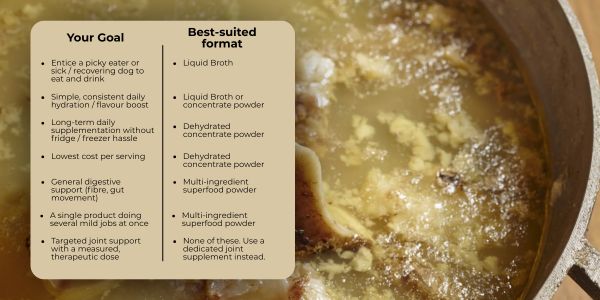
What to use it for: This is your go-to when the goal is appetite stimulation, hydration or short-term recovery support. A dog who’s off their food after illness, surgery or in their senior years and losing interest in meals. Its strong smell and flavour also make it the most effective option for genuinely picky eaters. If your main goal is enticing a reluctant eater or supporting a sick or recovering dog in the short term, a fresh liquid broth is generally the strongest tool of the three.
Trade-offs: Requires fridge or freezer space; shorter shelf life once opened or thawed; harder to dose precisely by weight compared to a scoop-based powder; quality varies a lot between suppliers since there’s no regulatory standard for what counts as “bone broth.” Broth made from fatty cuts (like marrow bones) can also be quite rich, worth introducing gradually and asking your vet first if your dog has a history of pancreatitis or struggles to digest fatty foods.
2. Dehydrated concentrate powder
Made by cooking broth down and then dehydrating it into a powder, sometimes combined with gelatin or added fibre to help it dissolve well in water.
What it is: Shelf-stable, easy to dose by scoop, often has a higher protein concentration by weight than liquid broth (because the water has been removed).
What to use it for: This is the format to reach for when the goal is consistent, everyday supplementation rather than a short-term intervention. A daily protein, collagen and mineral top-up as part of a long-term routine, without needing to manage freezer space or a short shelf life. It’s also the practical choice if you travel with your dog, want something you can pre-portion easily or want to disguise medication in a flavourful, reconstituted gravy on a regular basis rather than occasionally.
Trade-offs: More processing than a fresh liquid broth; quality depends heavily on how “clean” the formulation is. Some are close to pure broth solids, others are diluted with a longer list of co-ingredients; needs to be mixed with water before serving, an extra step some owners won’t want daily.
3. "Superfood" or multi-ingredient broth powders
These use broth as one ingredient among several. Often blended with pumpkin, turmeric, fruit extracts, sweet potato or similar additions, plus a starch (commonly tapioca or a flour) to bind the powder and help it dissolve.
What it is: A broader nutrient profile on paper. Added fibre, antioxidants and flavour variety, but the broth itself is often present in a fairly small amount relative to the total serving, since it’s sharing space with several other ingredients.
What to use it for: This format makes the most sense when your goal is general wellness and digestive support rather than concentrated protein or acute appetite stimulation. The added fibre sources (pumpkin, apple, sweet potato) support gut movement and stool quality and the broader ingredient mix is aimed at an “all-round topper” rather than a single specific outcome. It suits owners who want one product doing several small jobs at once. A bit of flavour, a bit of fibre, a bit of antioxidant support, rather than someone chasing one particular effect at a meaningful dose.
Trade-offs: Because the beneficial ingredients are shared across several additions, none of them tend to be present at a dose likely to produce a strong, specific effect. This is a “broad and mild” product, not a targeted one. The “extra” ingredients (like turmeric) are frequently included at a dose too low to be meaningfully active (more on that below).
How much bone broth should a dog actually get?
Regardless of format, a commonly used starting point is about 30ml of liquid broth per 4.5kg of body weight, once or twice a day. So a 10kg dog might get roughly 60–70ml, and a 30kg dog roughly 200ml, split across meals if needed. For powders, follow the specific product’s scoop guide, since concentration varies between brands.
A few practical points that apply regardless of format:
- Start small. Introduce any new broth gradually over a few days rather than a full serving on day one. A rich, unfamiliar addition to the diet can cause loose stools if introduced too quickly.
- It’s a topper, not a meal. Bone broth isn’t calorie-dense or nutritionally complete, so it shouldn’t replace a proper meal.
- Check with your vet first if your dog has kidney disease, pancreatitis or another condition where sodium, fat or mineral intake needs to be closely managed.
What does bone broth cost in South Africa?
Pricing varies by format, brand and where you’re based, but here’s a general sense of what’s currently on the market as reference points (not a recommendation of any specific product):
- Ready-made liquid broth tends to run in the region of R50–R70 for around 450ml, which works out to roughly R112–R155 per litre once you account for typical serving sizes.
- Dehydrated concentrate powder tends to be more economical per litre once reconstituted. One widely available concentrate costs around R295 for a 180g tub that makes up to 3.6 litres, working out to roughly R80–R85 per litre made up or around R5 per single serving.
- Homemade broth is generally the cheapest option if you already buy bones or offcuts for cooking, though it requires time (many recipes call for 4–12+ hours of cooking) and doesn’t come with a guaranteed nutrient analysis the way a commercial product does.
As a rough rule of thumb: if you want the lowest cost per serving for everyday use, a concentrate powder usually works out cheapest; if convenience and palatability matter more than cost, ready-made liquid broth is the more expensive but more “ready to serve” option.
Matching the format to your goal
The turmeric problem
Turmeric shows up constantly in bone broth marketing, often described as an anti-inflammatory boost. Here’s the catch: curcumin, the compound in turmeric believed responsible for its anti-inflammatory reputation, makes up only about 2–5% of raw turmeric root by weight. On its own, curcumin is also very poorly absorbed into the bloodstream (poor “bioavailability,” meaning most of it passes through the digestive system without actually being taken up and put to use). It typically needs black pepper extract (piperine) alongside it to meaningfully improve that absorption and even then, the doses shown to have an effect in research studies are usually far higher than what a small amount of turmeric powder stirred into a broth or included in a multi-ingredient blend would realistically deliver.
None of this means turmeric is useless or shouldn’t be included, but if a product’s main selling point is its turmeric content, it’s worth checking whether piperine (black pepper extract) is included and whether any dose is actually specified. If the label just says “cooked with turmeric” with no percentage or milligram amount, treat it as a flavour and marketing addition rather than a therapeutic one.
How to actually read a bone broth label
A few questions to ask when comparing products, whatever format they’re in:
- Is there a full ingredient list, or just a description? “Made from beef and cooked with turmeric” isn’t an ingredient list. It doesn’t tell you if there’s added salt, other flavourings or preservatives. A trustworthy product will disclose everything, including water.
- Is there a guaranteed analysis or nutritional panel? Look for protein, fat, fibre, ash and moisture percentages (for powders) or protein/fat/fibre grams per serving (for liquids). Products that skip this entirely make it hard to judge concentration or compare against alternatives.
- How much of the serving is actually broth? In multi-ingredient powders, check whether the broth is the largest listed ingredient by weight or a smaller component sharing space with several others. Neither approach is “wrong,” but it changes what you’re actually buying and whether it fits the goal you had in mind.
- Is sodium disclosed and is it free of onion or garlic? Sodium matters especially for dogs with kidney or heart conditions. A genuinely low-sodium broth should state a specific milligram amount per serving, not just claim to be “low sodium.” Onion and garlic, sometimes used to season broth made for human consumption, are toxic to dogs and should never appear in a pet-formulated product.
- Are joint-support claims backed by numbers? If a product claims to be a “source of glucosamine and chondroitin,” look for whether these are present as isolated, measured additions or just naturally occurring trace amounts from the broth itself. Both can be legitimate, but they’re very different claims and only one gives you a predictable dose.
What’s the shelf life and storage requirement? This is purely practical, not a quality marker, but it affects whether the product fits your routine. Liquid broths generally need refrigeration or freezing, powders don’t.

What bone broth is genuinely good for
Setting marketing claims aside, there’s reasonable, practical support for bone broth (in any of the three formats) as:
- A hydration and appetite aid for dogs recovering from illness, surgery or a reduced appetite. The aroma and flavour can encourage eating and drinking when a dog is reluctant.
- A palatability booster for picky eaters or when transitioning to a new food.
- A gentle, easily digested addition during digestive upset, since it’s low in fat and fibre in its plain form and doesn’t require much digestive effort.
- A general nutritional top-up; modest protein, gelatin and minerals as part of an already balanced diet.
One quality note worth flagging: because broth is made by simmering bone and connective tissue, it can also pick up trace amounts of heavy metals (such as lead) present in the source bones, particularly with prolonged cooking times. One analysis of commercial and homemade bone broths found detectable levels in some samples, though generally within food-safety limits. It’s a reasonable argument for sourcing broth from a reputable, tested supplier rather than assuming “natural” automatically means risk-free.
What it's not a substitute for
- A dedicated joint supplement with measured doses of glucosamine, chondroitin or MSM, if your dog has a diagnosed mobility condition.
- A complete or balanced meal on its own. Broth is a topper or supplement, not a food.
- Medical treatment for underlying conditions like kidney disease, pancreatitis or arthritis. Always loop in your vet before using broth (or any supplement) as part of managing a diagnosed condition, especially around sodium, fat and mineral content.
The bottom line
Bone broth is a genuinely useful, low-risk addition to most dogs’ diets but “bone broth” isn’t one standardised product and the three main formats aren’t interchangeable. A liquid broth is best suited to short-term appetite and recovery support, a concentrate powder suits long-term daily supplementation and tends to be the most cost-effective and a multi-ingredient superfood blend suits general, mild all-round support. Start with what you’re actually trying to achieve, then match the format and the serving size to that goal and use the label rather than the marketing copy to confirm the product can actually deliver it.
Note: This article is for general informational purposes and isn’t a substitute for veterinary advice. Always consult your vet before introducing a new supplement or making changes to your dog’s diet, especially if your dog has an existing health condition.

FAQ Section
Q: Is bone broth good for dogs every day?
A: Yes, most healthy dogs can have bone broth daily as a food topper or hydration boost, provided it’s a plain, dog-safe recipe without onion, garlic or added salt. Start with a small amount to check tolerance and always check with your vet first if your dog has an existing health condition.
Q: How much bone broth can I give my dog?
A: A commonly used starting point is about 30ml per 4.5kg of body weight, once or twice a day. For powders, follow the specific product’s scoop guide, since concentration varies. Introduce it gradually to avoid loose stools.
Q: Is bone broth good for a dog’s joints?
A: Bone broth naturally contains small amounts of glucosamine and chondroitin, but in far smaller, less consistent amounts than a dedicated joint supplement. It’s a nutritious addition to the diet, not a substitute for targeted joint support if your dog has diagnosed osteoarthritis.
Q: Can I make bone broth at home for my dog?
A: Yes, as long as you avoid onion, garlic, added salt and cooked bone fragments in the final broth and discard the cooked bones once it’s done. Homemade broth is generally the cheapest option, though it doesn’t come with a guaranteed nutrient analysis like a commercial product.
Q: Is bone broth safe for dogs with sensitive stomachs?
A: In small, gradually introduced amounts, plain bone broth is generally gentle and easy to digest. However, broth made from fatty cuts can be rich, so dogs with a history of pancreatitis or fat sensitivity should only have it with veterinary guidance.

As our beloved companions enter their golden years, we have both a privilege and a responsibility, to make sure that all the time they’ve given us is given
back with loving, attentive care.
The FREE eBOOK welcomes you to the journey of caring for your senior pets. Every moment matters and every day is an opportunity to celebrate the unconditional love they give you.