
VETERINARY DISCLAIMER: This article shares one vet’s professional perspective and experience. It is intended for general education and does not replace individualised veterinary advice. Please consult your own vet before changing your pet’s diet, especially if your pet has an existing health condition.
Who is Dr Nick Thompson?
Raw feeding for dogs has become one of the most debated topics in pet nutrition and few people have questioned it as openly as Dr Nick Thompson, a UK holistic vet who helped found the Raw Feeding Veterinary Society. In this feature, he traces his journey from sceptic to advocate for evidence-based feeding decisions and explains why he believes there’s no single right way to feed a pet. His honest, non-judgemental approach offers South African pet parents a useful starting point for thinking through their own dog’s diet.
The book that started it
How I came to raw feeding, why I helped start a society for it and what I have learned about trusting the dog in front of me.
In the mid-1990s, while I was studying homeopathy in my spare time, I came across a book by an Australian vet called Ian Billinghurst. It made a simple, annoying point. Dogs, he argued, might do better on the food they evolved to eat than on the dried pellets we sold by the sack. I was not convinced. So I did the only honest thing and started paying closer attention to the dogs themselves. I have been paying attention ever since and the questions that book raised have shaped how I have practised.
Where my veterinary career began
I qualified from Edinburgh in 1992 with a Bachelor of Veterinary Medicine and Surgery, and alongside it a BSc Honours degree in Pathological Sciences, covering immunology, parasitology, microbiology, molecular biology and virology. That extra year is where my soft spot for the immune system began and where I first got interested in the microbes and parasites that still occupy me now.
My first job was mixed practice at Garth Vet Group in Beeford, East Yorkshire, with a heavy emphasis on top-quality pig work. That is where I really learned about nutrition and preventative care. Nobody wants a thousand sick pigs on their hands. They want healthy, fast-growing ones and you get there by feeding and managing them well, not by reaching for the medicine afterwards. The lesson stuck.
After eighteen months I moved to Four Dales Veterinary Practice in Helmsley, up in the North York Moors. I felt like James Herriot, bombing round the dales in my Subaru to see cattle, sheep and pigs, then back to the practice for small animal work. It was a great life.
How did homeopathy change my approach to medicine?
It was there, after a few days on the Landmark Forum, that a plain question caught up with me. Did I want to be a conventional vet dabbling in alternatives, or commit fully and be honest about where I really stood? I chose to commit and I have been asking difficult questions of medicine ever since. I studied homeopathy at the Homeopathic Physicians Teaching Group in Oxfordshire and at the Homeopathic Hospital in London and it was those studies that had put Billinghurst’s book in front of me. The textbook answer still did not always fit the animal on the table, but now I was starting to see why.
The next four years did the rest. I joined Kingley Veterinary Centre near Chichester, run by Dr Mark Elliott, a gifted homeopath, acupuncturist and herbalist and a sharp, insightful clinician with it. Mark showed me that the questions I had been asking had real answers and real methods behind them. I almost became a partner there. Instead, in 1999, I went my own way and set up Holisticvet near Bath.
Setting up Holisticvet
Holisticvet was mine to shape from the start. Holistic is a word that gets thrown about, so let me be plain about what I mean by it. Treat the whole animal, not just the bit that is broken. Use the evidence where we have it and say so honestly where we do not. And reach for the drug cabinet last, rather than first. These days I work clinically with dogs, which is about time rather than affection. I love cats and live with three. I enjoyed my years with cattle and pigs and I still miss equine work, but there are only so many hours in a day and dogs are where I can do the most good. My favourite subjects are the gut, the microbiome and our profession’s habit of reaching for the prescription pad before the question has been properly asked.
Why did I start the Raw Feeding Veterinary Society?
By 2014 I was not the only vet asking these questions and a handful of us decided we were better off comparing notes than working alone. So we founded the Raw Feeding Veterinary Society. It is not a campaign group and it is not an echo chamber. We describe it, only half jokingly, as the tribe, and the four words under that are collaboration, education, community and support. The founding idea matters more than any of them. There is no single right way to feed a pet. Every method carries trade-offs of cost, convenience and biology and risk lives in all of them, raw and ultra-processed alike. We have never pretended otherwise. Around the same time I led an early global survey of 79 vets on their experiences of raw feeding, one of the first real attempts to find out what the profession actually thought rather than what it was assumed to think. We never got it into a peer-reviewed journal, which I still regret.
Is raw feeding for dogs safe? What the society's position statements say
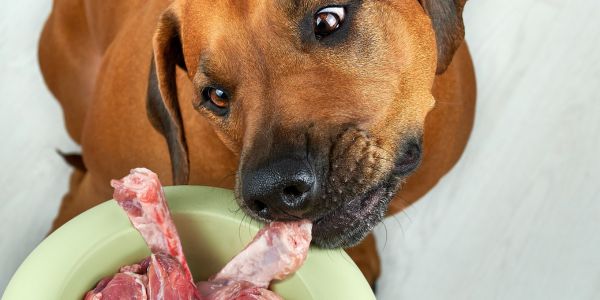
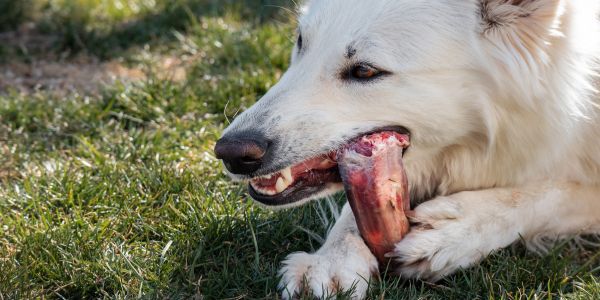
In 2021 the society published its first position statement, answering four common criticisms of raw feeding that the wider profession had settled on. A second statement in 2026 went further. Its line is sensible rather than tribal. Cooked bones, never, because they splinter in a way raw ones do not. Raw bones, under supervision, for the dogs they suit. Targeted supplements where an animal actually needs them, rather than a blanket rule in either direction. And one quiet demand running through all of it, that raw and ultra-processed food be judged by the same standard of evidence, not raw held to a higher bar. Out of a conference conversation in 2019 grew RawSAFE, an independent scheme that audits raw pet food makers, so owners can see that a product is made safely.
The society has grown into a genuinely global community of vets, nurses and other professionals, with an annual international conference, most recently in Mallorca. I have since handed the presidency to Dr Amaya Espíndola and stayed on as Founding President, which suits me. Building the thing was the interesting part. Watching other people run with it is the reward.
Other things I do
Away from the practice, I am a founding member of Raw Pet Medics with Conor Brady and Brendan Clarke, where we talk raw feeding and dog health most weeks for anyone who cares to listen. I consult for raw and integrative pet food companies across the UK, Europe, Southeast Asia and the Americas and I act as an expert witness in veterinary cases in the UK, Europe and Israel. I have lectured from Finland to the UAE and a good many places between. I have just finished the manuscript for a book on ultraprocessed food for dogs, due out in spring 2027. And I write a Substack called Raw Truth: Consensus is not Evidence, which is more or less my working motto.
What I actually believe
None of this makes me right. It makes me curious and stubborn about evidence and unwilling to mistake a popular opinion for a proven one. I try hard not to shame owners or colleagues who feed differently, because certainty is cheap and dogs are complicated. When I am not arguing about bowls you will find me doing calisthenics whenever I can, or raving to tribal House music, which between them tell you most of what you need to know about how I like to do things. I live in Wiltshire with my wife, our two children and an assortment of animals who all, I am pleased to report, eat rather well. Trust the dog in front of you. It is still the best advice I have.
VETERINARY DISCLAIMER: This article shares one vet’s professional perspective and experience. It is intended for general education and does not replace individualised veterinary advice. Please consult your own vet before changing your pet’s diet, especially if your pet has an existing health condition.
FAQ Section
Q: Is raw feeding safe for dogs?
A: Raw feeding for dogs can be safe when it’s carefully balanced and handled hygienically, but it carries different risks to commercial food, not fewer risks. Vets who work in this space, like Dr Nick Thompson, recommend judging raw and ultra-processed diets by the same standard of evidence rather than assuming either is automatically safer.
Q: Can dogs eat raw bones?
A: Raw bones can be given to dogs that suit them, but only under supervision, as they carry a risk of choking or digestive injury. Cooked bones should never be given, because cooking makes bones brittle and more likely to splinter than raw ones.
Q: What is the Raw Feeding Veterinary Society?
A: The Raw Feeding Veterinary Society is a global community of vets, nurses and other professionals founded in 2014 to share honest, evidence-based information about raw feeding for dogs. It isn’t a campaign group. It exists for collaboration, education, community and support among professionals with differing views.
Q: Is raw feeding better than kibble for dogs?
A: There’s no single right way to feed a dog and every method carries trade-offs around cost, convenience and biological risk. Rather than declaring one option superior, holistic vets recommend weighing your individual dog’s needs and looking at the evidence for both raw and commercial diets equally.
Q: How do I know if raw dog food is made safely?
A: Look for raw pet food makers that have been independently audited for food safety, such as through schemes like RawSAFE, which was set up specifically to give owners assurance that a raw product has been made safely. Always check hygiene and sourcing practices before choosing a supplier.
Nick Thompson BSc (Hons) Path Sci., BVM&S, VetMFHom, MRCVS
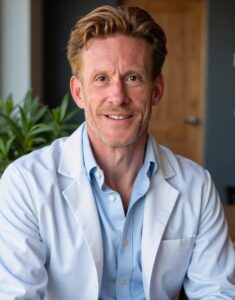
Nick Thompson is a veterinary surgeon, canine nutritionist and founder of Holisticvet Ltd., with over 30 years in clinical practice. His primary tool is raw and fresh food nutrition for dogs, combined where appropriate with herbal medicine, homeopathy and acupuncture, all grounded in evolutionary biology and a healthy scepticism towards received wisdom, conventional or otherwise.
Nick is founding President of the Raw Feeding Veterinary Society (www.rfvs.info) and lead author of the first global survey of vets on raw feeding, conducted in 2014. He has consulted for some of the UK’s leading raw and integrative pet food companies, including ProDog Raw, Benyfit Natural, The Postbiotic Company, Hilton Herbs, Verm-X and Roots.dog, as well as academic institutions across Europe and beyond.
He writes on Substack at substack.com/@holisticvetuk, appears on podcasts once or twice a week, and co-hosts Raw Pet Medics with Dr Conor Brady and Dr Brendan Clarke. His online courses at holisticvet.shop offer dog owners clear, practical, evidence-based guidance on raw feeding and canine health.
He lives in Wiltshire with his wife, two children, and an assortment of animals who all eat rather well.