
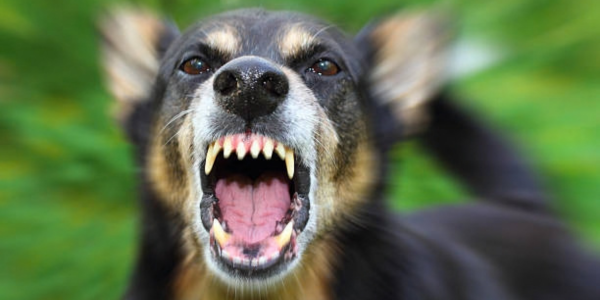
A rabies exposure isn’t only a bite: a scratch or saliva from an infected animal on broken skin or in your eyes, nose or mouth, can also put you at risk. Rabies is almost always fatal once symptoms appear, but in people it can be prevented if you wash the area immediately and get medical treatment without delay. Here’s what every South African pet parent needs to know to protect their family and their pets.
A bite isn’t the only way you can be exposed to rabies. Knowing what counts as an exposure and what to do immediately afterwards can save a life.
Rabies is one of those diseases most pet owners know is serious, but many of us would struggle to answer a much more important question: “If I, my child or my pet were potentially exposed to rabies today, would I know what to do next?“
Rabies is a viral disease that affects the nervous system of mammals, including dogs, cats, wildlife, livestock and humans. Once clinical symptoms of rabies develop, the disease is almost always fatal. The crucial difference is that human rabies can be prevented after an exposure if appropriate treatment is started promptly. That makes knowing what to do after a possible exposure incredibly important.
For World Rabies Day on 28 September 2026, the theme Stronger Together highlights the role all of us play. Pet owners, veterinarians, healthcare professionals, animal health workers, communities and government in preventing a disease that we already have the tools to control.
What counts as a possible rabies exposure?
Many people associate rabies with being badly bitten by an aggressive dog. But an exposure can be far less dramatic.
Rabies virus is present in the saliva of an infected animal and can potentially be transmitted when that saliva comes into contact with broken skin or mucous membranes.
Possible exposure can therefore include:
- being bitten by a potentially infected animal;
- being scratched, particularly if the skin is broken;
- saliva from a potentially infected animal coming into contact with an existing cut, wound or broken skin;
- saliva entering your eyes, nose or mouth.
Simply touching or petting an animal, without contact between saliva and broken skin or mucous membranes, is not regarded in the same way as an exposure. However, when there is any uncertainty, it is safer to have the incident assessed by a healthcare professional.
What should you do immediately after a possible rabies exposure?
Been bitten, scratched or exposed to saliva? Do this immediately.This isn’t a situation where you should “wait and see”
1. Wash the area immediately
Wash and flush the wound or affected area thoroughly with soap and running water for 10–15 minutes. Ideally for approximately 15 minutes. Thorough washing is an important first-aid measure because it physically helps remove virus that may be present at the exposure site.
Do this even if the wound looks minor.
2. Seek medical attention immediately
Go to a healthcare facility and tell them clearly that you have had a possible rabies exposure. Do not wait to see whether the animal becomes ill. Do not wait for symptoms. And don’t assume that because a bite or scratch looks small, it isn’t important.
A healthcare professional needs to assess the type of exposure and decide what post-exposure treatment is required.
3.You may need post-exposure prophylaxis
Rabies post-exposure prophylaxis, usually referred to as PEP, is treatment given after someone has potentially been exposed to rabies.
Depending on the type of exposure, treatment may include:
- a course of rabies vaccination; and
- rabies immunoglobulin for certain higher-risk exposures.
The treatment required depends on how exposure occurred, whether the skin was broken and other factors assessed by the healthcare professional. The important message for pet owners is simple:
Prompt treatment can prevent human rabies.
Once rabies symptoms develop, treatment is no longer able to prevent the disease.
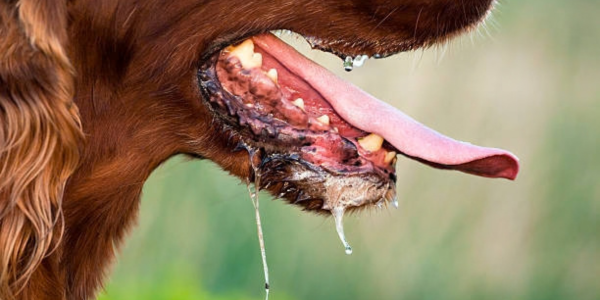
What if the animal looked completely normal?
Don’t use appearance alone to decide whether you need medical attention. An animal does not necessarily have to be foaming at the mouth or behaving aggressively for an exposure to deserve investigation.
Rabies affects the nervous system and behaviour can vary. Possible signs may include:
- unusual or sudden behavioural changes;
- unexplained aggression;
- unusual tameness or loss of normal fear;
- excessive salivation or difficulty swallowing;
- weakness;
- paralysis;
- abnormal vocalisation;
- neurological signs.
An animal displaying strange behaviour should never be approached simply because you want to help or catch it. If you suspect rabies, contact veterinary or animal health authorities rather than attempting to capture the animal yourself.
What should you do if your dog or cat has had contact with a suspicious animal?
This is another situation where pet owners shouldn’t try to manage the problem themselves. If your pet has fought with, been bitten by, or had suspicious contact with an animal that may have rabies:
Separate your pet from other animals and people as safely as possible and contact your veterinarian or local State Veterinary Services immediately.
Avoid unnecessary contact with saliva, particularly if you have cuts or broken skin. Don’t try to catch or handle the suspected rabid animal yourself. Your veterinary team or State Veterinarian can advise you on the appropriate next steps based on the circumstances and your pet’s vaccination status.
Is rabies vaccination compulsory for pets in South Africa?
One of the most effective things a pet owner can do to prevent rabies is also one of the simplest: Keep your dogs and cats properly vaccinated against rabies.
In South Africa, rabies vaccination of dogs and cats is a legal requirement.
Under the current regulations, dogs and cats must receive their first rabies vaccination at around three months of age, followed by a second vaccination at least 30 days later and within 12 months of the first. Thereafter, vaccination is legally required at least every three years.
In higher-risk areas, more frequent (including annual) vaccination may be advised. Speak to your veterinarian about the appropriate vaccination schedule for your pet and area. And don’t assume an indoor lifestyle makes vaccination unnecessary. Animals escape. Wildlife enters gardens and homes. Families travel. Pets move between provinces.
Rabies does not respect garden walls or provincial borders.
WHAT ABOUT RABIES TITRE TESTING?
Rabies titre testing measures the level of rabies-neutralising antibodies in your pet’s blood and can help show whether an animal has mounted an immune response following vaccination. However, a positive rabies titre does not currently replace the legal requirement to vaccinate dogs and cats against rabies in South Africa.
South African regulations require dogs and cats to receive their prescribed rabies vaccinations and subsequent boosters. There is currently no provision allowing an antibody titre result to be used instead of the legally required vaccination schedule.
Titre testing can still be useful in certain circumstances. For example, South African rabies guidance recognises a neutralising antibody level above 0.5 IU/ml as evidence that a previously vaccinated animal has responded to vaccination. But antibody levels do not provide an absolute guarantee that an animal will be protected if exposed to rabies and titre testing cannot determine whether an exposed animal is incubating the disease.
If you are considering titre testing because of your pet’s individual health circumstances, discuss it with your veterinarian, but do not allow rabies vaccination to lapse on the assumption that a positive titre fulfils the legal requirement.
Common questions
“But my dog never goes anywhere…”
Rabies isn’t restricted to roaming dogs. Any mammal can become infected.
In South Africa, rabies can occur in domestic animals, livestock and wildlife. Species associated with rabies include dogs, jackals, foxes, mongooses and other mammals and rabies has also been identified in Cape fur seals.
Movement of dogs and cats between areas can also introduce the virus into communities where owners may not consider rabies an immediate concern. That is one reason vaccination shouldn’t only happen when there happens to be a rabies outbreak nearby.
“Can I just watch the animal for symptoms?”
This is one of the most dangerous assumptions someone can make after a possible exposure. Your medical treatment should not be delayed while you wait to see what happens to the animal.
Healthcare professionals and veterinary authorities can determine whether observation, testing or other investigation of the animal is appropriate. Your job after a possible human exposure is much simpler:
Wash. Seek medical attention. Tell them it may be a rabies exposure.
“What if I’ve had a rabies vaccine before?”
Tell the healthcare professional treating you.
Previous rabies vaccination can affect the post-exposure treatment required, but it does not mean you should ignore a new potential exposure or decide for yourself that no further treatment is necessary.
Let the medical team make that decision.
What every pet-owning household should know
Rabies preparedness doesn’t need to be complicated. Make sure everyone in your household knows these four things:
1. Keep your dogs and cats vaccinated against rabies.
Don’t wait for an outbreak or vaccination campaign before checking whether your pets are protected.
2. Treat bites, scratches and suspicious saliva exposure seriously.
Especially when the animal’s vaccination status or health is unknown.
3. Wash immediately.
Soap and running water for 10–15 minutes, ideally around 15 minutes.
4. Get medical help immediately.
Rabies exposure is not something to monitor at home.
Stronger Together
The 2026 World Rabies Day theme, Stronger Together, is particularly appropriate because rabies prevention doesn’t depend on one person or one profession.
Veterinarians protect animals. Healthcare professionals protect people who have been exposed. Animal health teams monitor and respond to disease. Communities report suspicious cases. And pet owners create one of our most important lines of defence by vaccinating their dogs and cats and knowing how to respond when an exposure occurs.
When enough animals are protected, we’re not only protecting individual pets. We’re helping protect families and entire communities.
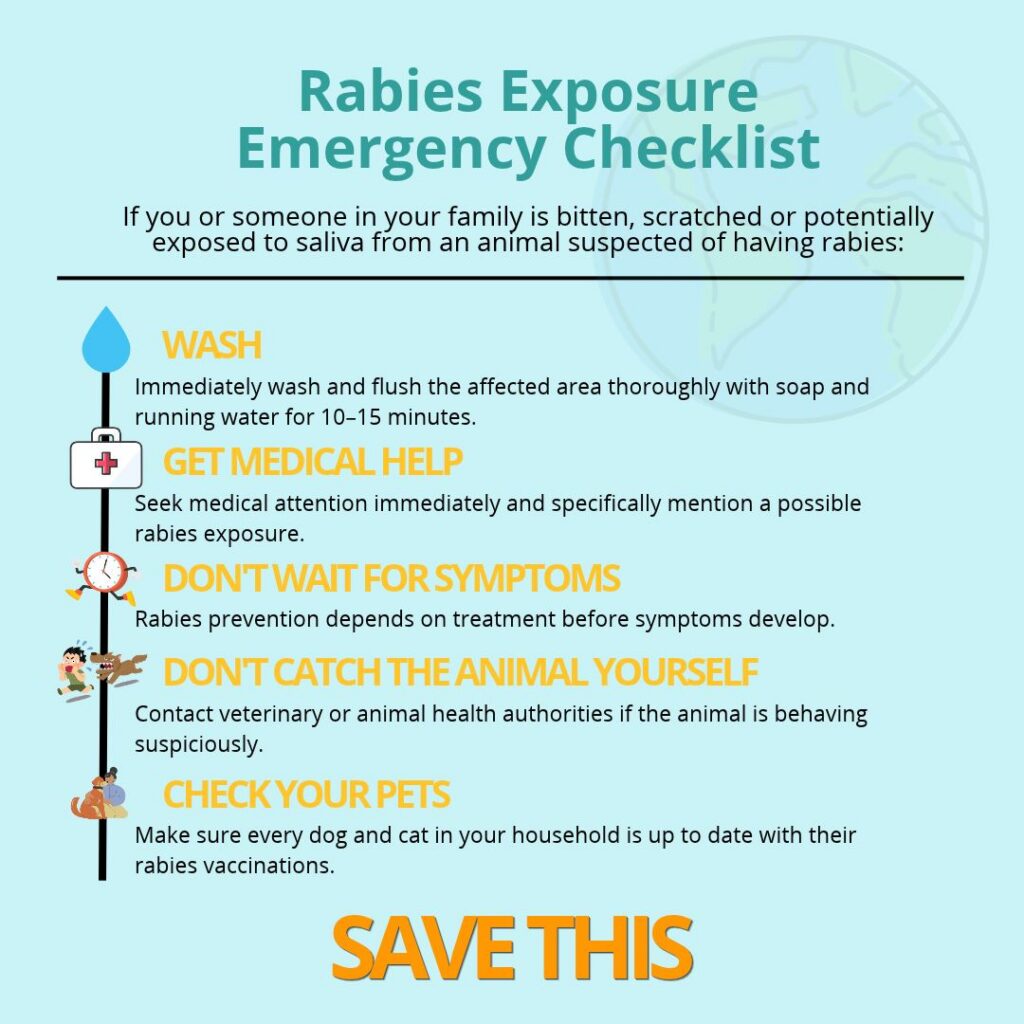
SAVE THIS: Rabies exposure emergency checklist
State Veterinary office contact details are available at:
https://www.nda.gov.za/index.php/component/content/article/451-provincial-veterinary-services-contacts
A list of all registered veterinary facilities is available at (Dated July 2026):
https://savc.org.za/wp-content/uploads/2026/07/FacilityRegisterPublish_July-2026.pdf
Disclaimer: This article is intended for general educational purposes and does not replace advice from a medical doctor, veterinarian or State Veterinary Services. Anyone who may have been exposed to rabies should seek medical attention immediately.
Sources: South African Veterinary Association / National Rabies Advisory Group World Rabies Day 2026 campaign material; National Institute for Communicable Diseases (NICD); South African Department of Agriculture; South African Animal Health Regulations.
Frequently Asked Questions
Q: Can you get rabies from a scratch?
A: Yes, it is possible. Rabies is spread through the saliva of an infected animal and a scratch that breaks the skin can carry saliva into the wound, especially from cats that groom their paws. A scratch from an animal that may have rabies should be treated as a possible rabies exposure. Wash it with soap and running water for 10 to 15 minutes and seek medical attention straight away.
Q: What should I do immediately after being bitten by a dog that might have rabies?
A: Wash and flush the wound with soap and running water for 10 to 15 minutes, even if it looks minor. Then go to a clinic or hospital immediately and tell the staff clearly that it may be a rabies exposure. Don’t wait for symptoms or to see whether the dog becomes ill. A healthcare professional will decide whether you need post-exposure treatment.
Q: Can I wait and watch the animal for symptoms before getting treatment?
A: No. Waiting to see whether the animal becomes ill is one of the most dangerous assumptions after a possible exposure, because treatment only prevents rabies if it starts before symptoms develop. Get medical help first. Healthcare professionals and veterinary authorities will decide whether the animal needs to be observed or tested. Your job is to wash the wound, seek care and mention rabies.
Q: Is rabies vaccination compulsory for dogs and cats in South Africa?
A: Yes. South African law requires dogs and cats to have their first rabies vaccination at around three months old, a second dose at least 30 days later and within 12 months of the first and a booster at least every three years after that. In higher-risk areas, your vet may advise more frequent vaccination. Indoor pets are not exempt.
Q: Can a rabies titre test replace my pet’s rabies vaccination?
A: Not in South Africa. A titre test measures rabies antibodies and can show that a previously vaccinated pet responded to the vaccine, but there is currently no legal provision allowing a titre result to replace the required vaccination schedule. Titre results also don’t guarantee protection after a rabies exposure. Discuss titre testing with your vet, but don’t let vaccinations lapse.