
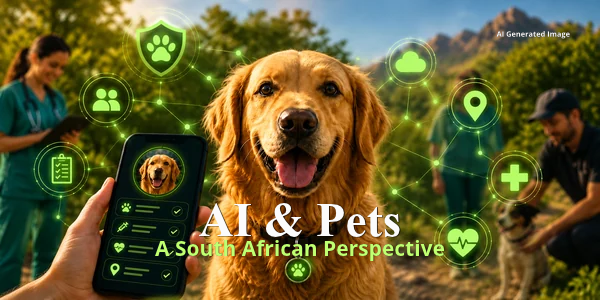
Generative AI & Pets: Creativity, Care and Responsibility
Generative AI can create pet-themed text, illustrations, images and videos, but it can also make mistakes or create misleading scenes. Pet owners and businesses should check claims, avoid representing fictional events as real, use authentic identification photos and seek professional advice for pet health decisions.
From a favourite pet photo to a short film, generative AI is opening new creative possibilities. The opportunity is exciting. What matters is how we use it and whether our pets remain at the centre of the story.
When an Idea Becomes Something You Can See
What happens when a few words can become a picture, a story or a video? A Guardian might want to celebrate a pet’s birthday. A rescue organisation might need an adoption-awareness campaign. A groomer might have an idea for a promotion but no photographs that fit. These are different needs, but they share a starting point: someone has something to communicate.
AI can create the story. We remain responsible for the pet behind it.
Generative artificial intelligence (AI) produces content in response to instructions, often called prompts. Depending on the tool, that content can include text, images, audio or video. It is not simply finding an existing picture or webpage. It is generating a response.
Not all AI is generative: recognising something in a photograph and creating a new photograph-like image are different tasks. For the pet community, this creates opportunities that are practical, personal and sometimes simply enjoyable.
More Than a Pretty Picture
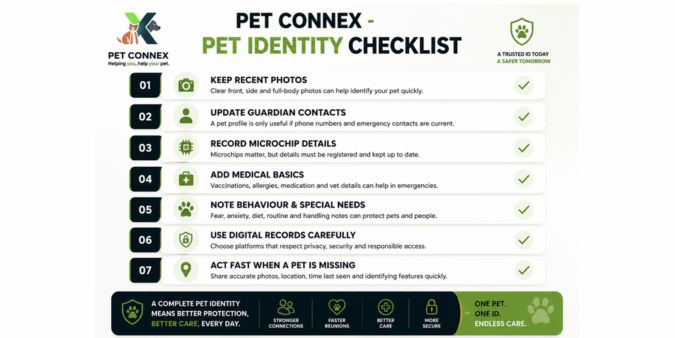
An everyday pet photo can become an illustrated portrait, a celebration card or the starting point for a visual story. Image-generation and editing tools can also help explore different backgrounds, compositions and artistic treatments.
Imagine your cat as the host of a tiny café or your dog taking centre stage in an illustrated adventure. These are creative interpretations, not records of something that happened. For Guardians, that can be a way to celebrate a companion. For pet businesses, it can provide a starting point for a campaign, an educational graphic or a seasonal message.
Video adds another dimension. Tools that work from written descriptions or reference images can generate short moving scenes, giving an idea motion and a sequence rather than a single frame. A fictional pet adventure or a playful community greeting does not need to be filmed with a real animal performing every scene.
But creativity should still have a purpose. A rescue campaign should help people understand the cause. A business promotion should communicate something genuine. A pet celebration should remain a celebration, not pressure to make a real animal imitate what a computer can create.
The value is not simply that we can create more. It is that we can communicate something meaningful.
AI Is Helpful, Not Perfect
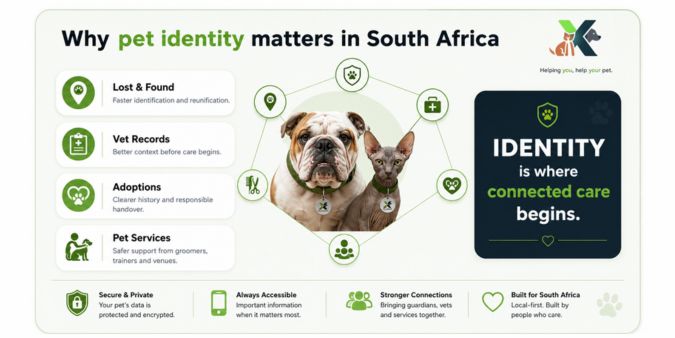
Generative AI is not only about visual content. It can also help turn information into something easier to work with.
A Guardian could use AI to organise notes before a vet appointment or prepare questions they want to ask. A pet-care professional could also use it to help explain information more clearly before sharing it with clients. But AI can still make mistakes, so important information should always be checked. That distinction matters.
An answer can sound confident and still be incomplete or wrong. A response that mentions your pet’s breed is not automatically an assessment of your individual pet. Use AI to prepare questions for your vet or a qualified behaviour professional, not to replace their advice. It should not become the reason to change medication, dismiss a worrying symptom or delay seeking care.
The useful question is not, “Can AI give me an answer?” It is, “What can I safely use this answer for?”
Use imagination to tell a story. Keep real information at the centre of a pet’s care and identity.
Creativity Still Needs Boundaries
The same care belongs in the images and videos we share. A fictional scene can be entertaining when it is presented as fiction. It becomes a different matter when it is presented as a real rescue, a real treatment result or evidence that a product works.
My view is straightforward: Use creative images to help tell the story, not to make something look true when it isn’t.
For adoption profiles, lost-pet notices and identification records, use clear, recent photographs that accurately represent the animal. A more attractive image is not a better image when it changes the details someone needs to recognise a pet.
Before sharing generated content, review the result rather than assuming the prompt was followed. Check the animal’s appearance, the behaviour being shown, any wording and the claims being made. Obtain permission for other people’s photographs and avoid putting unnecessary personal information into creative tools. Safety filters can help flag harmful content, but they do not check everything. A result that passes a filter still needs to be checked for accuracy and suitability.
For South African pet businesses and rescue organisations, I see an opportunity to combine local knowledge with these creative tools. Let technology assist with the presentation. Keep the facts, professional judgement and responsibility with people.
Create, Check, Share Responsibly
- CREATE — Bring an idea to life. Be clear about the message you want to share.
- CHECK — Are the facts correct? Does the content represent the animal appropriately?
- SHARE RESPONSIBLY — Be transparent. Could someone mistake your creative scene for a real event?
The Pet ConneX Perspective: Create with Purpose
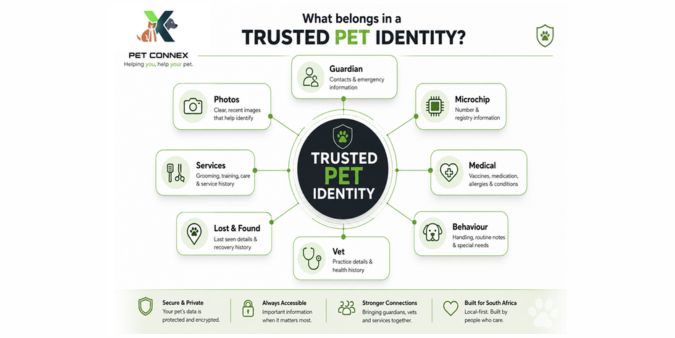
Image generation. Video generation. Pet-focused content.
Bringing Creativity into Pet ConneX
At Pet ConneX, our creative offering brings together image generation, video generation and pet-focused visual content through the Pet ConneX Library. Image generation helps turn an idea into a visual starting point, whether that is a pet-themed illustration, a campaign concept or a piece of social content. Video generation brings movement and storytelling into that process.
The Library also provides a place for pet businesses to work with ready-to-use images and videos organised around relevant categories and audiences. The purpose is practical: help people communicate without having to begin every piece of content from a blank page.
These creative tools sit alongside our wider focus on Digital Pet Identity, connected services and everyday support through Furry Friend AI. They serve different purposes, but the intention remains the same: make technology useful to the people who care for pets.
Creativity with Safeguards
We have also implemented safeguards around our creative tools to support responsible use. Those safeguards are part of the process, not a reason to stop checking the result. Generated images and videos still need careful human review before they are shared, particularly where a message concerns animal welfare, professional advice or a real pet’s story.
For me, responsible innovation means paying attention to both sides: what the technology makes possible and what we should not allow convenience to replace.
More Possibilities. The Same Responsibility.
Generative AI gives us another way to celebrate pets, support communication and bring ideas to life. The goal is not to replace real care. It is to make technology more useful to the people who provide it.
The content may be generated. Our responsibility to the animals behind it is real.
Please note: This column reflects the views and product experience of its author, Runveer Singh, founder of Pet ConneX. It is intended for general educational purposes. Always assess your own pet’s individual needs, safety and body language before trying any online trend, and consult your veterinarian with any health concerns.
Sources noted in the October 2026 magazine
IBM: What is generative AI? | Adobe: Discover Adobe Firefly | C. P. Chu: ChatGPT in Veterinary Medicine (2024) | Microsoft Learn: Content filtering. Verify source citations and destination links before publishing.

Runveer Singh is the CEO and founder of Pet ConneX, a proudly South African digital identity platform connecting pets, guardians, vets and pet service providers. With a background in Business Analysis and Solutions Architecture and a career spanning FNB, ABSA, BankservAfrica and digital banking innovation, Runveer brings a rare combination of technical depth and genuine love for animals to the pet care space. In 2021 he was part of the team that published South Africa’s first Digital Identity Story. That work, combined with a late-night spark of inspiration, led to the founding of Pet ConneX, a platform validated through a proof of concept with the University of KwaZulu-Natal, supported by Seamless Africa and backed by close to three years of Microsoft startup and AI partnership support. Runveer believes technology should solve real problems: reuniting lost pets, giving guardians easy access to their pet’s information, and helping vets deliver better care. He writes for WeLovePetsSA on the intersection of pet health and emerging technology.