
Management: What you allow you teach.
A harmonious multi-dog household isn’t built on constant play, wrestling and excitement, it’s built on calm. While dogs feeding off each other’s energy may look like fun, it can keep their nervous systems in a near-constant state of arousal, contributing to reactivity, poor impulse control and even conflict between dogs who otherwise get along. This article explains why peace, predictability and a strong human-dog bond matter more than non-stop play and offers practical ways to build calmer, more secure multi-dog homes.
What does calm coexistence actually mean in a multi-dog household?
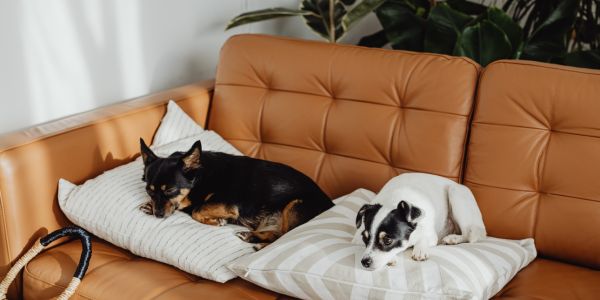
There’s a common assumption in multi-dog households about what harmony looks like: dogs constantly playing together, wrestling in the lounge, chasing each other through the garden and feeding off each other’s excitement.
And while play has its place, a home built around constant frenzy and over-arousal creates more problems than it solves. Rather, success in a multi-dog household requires setting your dogs up for optimal cohabitation. It’s about calm coexistence, not non-stop excitement.
Calm coexistence means dogs who can relax around one another, share space without conflict and regulate their emotions without needing constant interaction. These are the households in which dogs settle easily. Tensions are minimal, while dogs and humans feel safe and at ease.
The hidden cost of constant arousal
When dogs are continually encouraged to engage with one another through high-energy play, their nervous systems rarely get a chance to fully down-regulate.
Over time, this chronic state of arousal can contribute to a range of behavioural challenges, including increased reactivity, frustration, poor impulse control, resource guarding and even conflict between dogs who otherwise appear to “get along.”
Predictability is a non-negotiable ingredient for emotional safety. Dogs make better decisions when their households are more stable, resulting in a calmer demeanour and internal state.
Dogs who can simply exist in the same space without needing to always interact are far less likely to experience ongoing stress or develop unhealthy coping strategies. Calm gives dogs time to think, rest and feel secure.
Why should the primary bond be with you, not another dog?
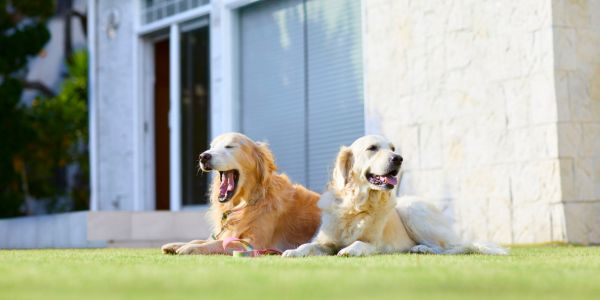
Attachment is another common and yet overlooked issue that arises in multi-dog homes. Dogs naturally form bonds with one another and canine companionship can be incredibly enriching. However, problems arise when a dog’s strongest attachment shifts away from their human to another dog in the household.
When dogs rely on each other as a primary source of security, stimulation or emotional regulation, they struggle when their companion is unavailable. This spells disaster whenever there are vet visits, training sessions, separate walks, ageing or loss. The sense of loss can manifest as anxiety, distress or an inability to cope independently.
Therefore, as a healthy emotional foundation, the primary bond should always be between dog and owner.
This doesn’t diminish the value of canine relationships. Rather, it ensures that each dog feels safe, confident and supported by their human, regardless of what other dogs are doing.
One-on-one time and alone time matter
Given the value of this bond, every dog in a multi-dog household needs individual time with their owner.
One-on-one time strengthens the human-dog relationship, improves responsiveness to guidance and allows the dog to develop confidence without leaning on another dog. It’s also an opportunity for focused enrichment, training and calm connection.
Equally important is teaching dogs how to be alone. As a dog trainer and behaviourist, I often see this lacking in multi-dog households. Unfortunately, it is a common pattern. They spend all of their time with the other dogs in the household.
Before any actual training can even begin, I first need to help them become comfortable with separation. Without this, progress in other areas is often limited.
Separation distress isn't always about humans
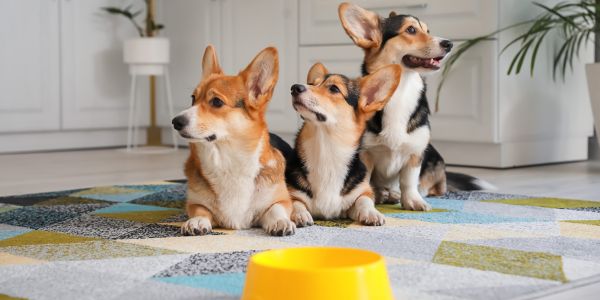
Dogs that are constantly together and continually stimulated are at a higher risk of developing separation-related distress from their owners and each other. When togetherness becomes the default state, absence can feel overwhelming.
A strong human-dog bond, paired with healthy independence, creates emotional stability. Dogs who feel secure in their relationship with their owner and confident in their ability to cope alone are more adaptable, resilient and balanced.
How can you support calm coexistence at home?
Encouraging calm coexistence doesn’t require you to eliminate play or interaction altogether. Instead, it means creating balance.
Here are some practical ways to provide support:
- Encouraging dogs to settle away from one another.
- Practising short, positive separations inside and outside of the home.
- Rewarding calm, independent rest.
- Avoiding the assumption that dogs must always be together.
- Teaching dogs that safety and comfort don’t depend on constant contact.
These small shifts can have a beneficial impact on the emotional health of each dog and the overall atmosphere of the household.
Calm is sustainable
In closing, it is important to bear in mind that the goal in a multi-dog home isn’t about raising dogs that constantly entertain or regulate each other. In a sense, it is the exact opposite. The point is to nurture dogs who feel safe, settled and emotionally secure, both together and apart.
Calm is sustainable and not boring. After all, sustainability is what creates truly harmonious multi-dog households in the long run.
DISCLAIMER: This article is for general educational purposes and reflects the author’s professional experience as a dog trainer and behaviourist. It is not a substitute for an individual behavioural assessment. If your dog is showing signs of significant anxiety, distress or aggression, please consult a qualified veterinary behaviourist or registered animal behaviourist.

FAQ Section
Q: Is it bad for dogs to play together all the time?
A: Not inherently, but constant high-energy play can keep dogs in a state of near-permanent arousal. Over time, this can contribute to reactivity, frustration, poor impulse control and even conflict between dogs. A healthy multi-dog household needs a balance of play and genuine downtime, not non-stop excitement.
Q: How do I know if my dogs are too bonded to each other?
A: Signs include distress when separated, an inability to settle alone or one dog seeming lost without the other during vet visits, walks or training. A healthy foundation means each dog’s strongest bond is with you, not solely with another dog in the home.
Q: How can I create a calmer multi-dog household?
A: Encourage dogs to settle in separate spaces, practise short positive separations and reward calm, independent rest rather than constant interaction. Give each dog one-on-one time with you regularly. These small, consistent shifts support genuine multi-dog household harmony.
Q: Can dogs get separation anxiety from each other, not just from their owner?
A: Yes. Dogs who are constantly together and continually stimulated can develop separation-related distress when apart from each other, not only from their owner. This is more likely when togetherness has become the household’s default state.
Q: Do I need to stop my dogs from playing together to fix this?
A: No. The goal isn’t to eliminate play but to create balance. Calm coexistence means dogs who can relax around one another and regulate their own emotions, while still enjoying play and companionship in moderation.
Keelan Stanley Nel, Happy Paws Dog Behaviour
Based in Cape Town, Keelan is a COAPE accredited dog behaviourist and trainer who offers virtual and in-person behavioural assessments and training services for dogs and their guardians.
Keelan has attained several qualifications, including the COAPE CertAT, CertAB, and DipCABT levels, as well as a certification in Canine Nutrition through PetSense College.