

Management: What you allow you teach.
Dog management in training is the practice of controlling your dog’s environment to prevent unwanted behaviours from being repeated and reinforced. Unlike commands and cues, management works in the background, shaping what your dog is exposed to, what they can access and what opportunities they have to succeed or struggle. When used alongside positive training, it is one of the most effective and compassionate tools available to any dog owner.
One of the most important, and often overlooked, principles in dog training is simple: what you allow, you teach. Every interaction, every environment and every opportunity your dog has to behave in a certain way is shaping their understanding of the world. Whether intentional or not, you are always teaching your dog something.
This is where management comes in. Management is not training in the traditional sense, it’s not about teaching behaviours like “sit” or “stay.” Instead, it’s about controlling the environment and situations your dog is exposed to so that they are set up to succeed. Good management prevents unwanted behaviours from being rehearsed, while creating space for desirable behaviours to develop.
Why Management Matters
Dogs learn through repetition and consequence. If a behaviour “works” for them, meaning it leads to something rewarding or satisfying, they are more likely to repeat it. This is true whether the behaviour is desirable (like calmly lying on a bed) or undesirable (like jumping on guests or stealing food off the counter).
For example, if a puppy is allowed to jump up on people and gets attention, that behaviour is being reinforced. From the dog’s perspective, jumping works. Over time, it becomes a habit.
Management helps break this cycle before it starts. By preventing your dog from practicing behaviours you don’t want, you reduce the likelihood of those behaviours becoming ingrained.

Management vs Training
It’s important to understand that management and training work hand in hand, but they are not the same thing.
- Training teaches your dog what to
- Management prevents your dog from rehearsing what not to
Think of management as creating the right conditions for training to be effective. Without it, even the best training plans can fall apart because the dog keeps practicing unwanted behaviours in everyday life.
For instance, teaching a dog not to pull on the lead is much harder if they are constantly taken on walks where they can drag their owner toward exciting or distracting things. A managed approach would be using quieter routes, appropriate equipment or even temporarily reducing exposure to overwhelming environments while your dog learns new skills.
The Role of Environment
Dogs are highly influenced by their environment. Their behaviour is not just a reflection of their training, but also of the opportunities available to them.
Ask yourself:
- Can my dog access things they shouldn’t?
- Are they being put in situations they’re not ready to handle?
- Am I expecting too much, too soon?
A classic example is leaving food within reach. If a dog repeatedly steals food from the counter, it’s not because they are “naughty dogs”, it’s because the environment allows it. From a management perspective, the solution is simple: remove access. Use barriers, keep counters clear or supervise closely.
When you change the environment, you change the behaviour.
Preventing Rehearsal
Every time a dog practices a behaviour, neural pathways in the brain are strengthened. This is why unwanted behaviours can become so persistent. They’ve been rehearsed over and over again.
Management interrupts this rehearsal.
If a dog barks excessively at the window, allowing them to continue reinforces the behaviour. We all know the saying “practice makes perfect” and this too applies to the rehearsal of undesirable behaviours.
Management might involve blocking visual access, using window film, or redirecting the dog to a different activity. Over time, this reduces the habit and creates space to teach a more appropriate response.

Setting dogs up for success
Good management is about meeting your dog where they are, not where you wish they were.
Expecting a young or untrained dog to make perfect decisions in challenging situations is unrealistic. Instead, management allows you to gradually build their skills in a way that is fair and achievable.
This might include:
- Using baby gates to control movement or access around the house
- Keeping dogs on a lead in new or over-stimulating environments
- Providing appropriate outlets for natural behaviours like chewing, digging or sniffing
- Supervising interactions with children, people or other animals
By doing this, you reduce the chances of mistakes while increasing opportunities for success.
Reducing stress and frustration.
Management doesn’t just benefit behaviour, it also supports your dog’s emotional wellbeing.
When dogs are repeatedly put in situations they cannot cope with, it can lead to stress, anxiety and frustration. This often shows up as “problem behaviours,” but the root cause is often a lack of appropriate support.
For example, a dog that reacts (lunging, barking, pulling or general distraction) on walks is not a “bad dog”, they may simply be overwhelmed. Management strategies like increasing distance from triggers, choosing quieter walking areas or walking at off-peak times can dramatically improve your dog’s ability to cope.
When a dog feels safe and understood, learning becomes much easier.
The Human Factor.
Management requires awareness, consistency and sometimes a shift in mindset. It’s about taking responsibility for the situations we put our dogs in, and making better choices for them so that they can succeed.
It can be tempting to test a dog’s training before they’re ready. But every failure is a learning opportunity for your dog as well, and not always in the direction we want.
Instead of asking, “Will my dog behave appropriately?”, a better question is, “Have I set my dog up to succeed in this situation or environment?”
Management is not a shortcut or a crutch, it’s a foundational part of raising and training a well-adjusted dog. It protects your training, supports your dog’s emotional health and prevents unwanted behaviours from taking root.
Dogs are always learning. Every moment is shaping their understanding of what works and what doesn’t.
So the next time your dog does something you don’t like, take a step back and ask yourself, “Did I allow that to happen?”
READ the full article and more in the JUNE 2026 Magazine.
DISCLAIMER: If your dog’s behaviour is sudden, severe or accompanied by physical symptoms, consult your veterinarian before beginning any training or management programme. Some behavioural changes can have medical causes that need professional assessment.

FAQ Section
Q: What is dog management in training and how is it different from teaching commands?
A: Dog management in training means controlling your dog’s environment so that unwanted behaviours don’t get the chance to be practised and reinforced. It’s not about commands like “sit” or “stay”, it’s about preventing situations where your dog makes choices you don’t want, such as using baby gates, keeping counters clear or choosing quieter walking routes. Management and training work together: one prevents mistakes, the other builds new skills.
Q: Why does my dog keep repeating bad behaviours even though I tell them no?
A: Dogs repeat behaviours that work for them, meaning behaviours that lead to something rewarding, even if that reward is just attention or the satisfaction of the action itself. If the environment keeps allowing the behaviour, it gets rehearsed and reinforced every time. Dog management in training addresses this by removing or reducing the opportunity for the behaviour to happen, which gradually weakens the habit while you build a better alternative.
Q: Is management in dog training just a temporary fix?
A: No. Management is a foundational part of responsible dog ownership, not a shortcut. It protects your training by preventing unwanted behaviours from being practised between sessions and it supports your dog’s emotional wellbeing by keeping them out of situations they can’t yet handle. As your dog’s skills grow, you can gradually reduce management tools. But in the early stages especially, good management is what makes training stick.
Q: How do I stop my dog from barking at the window or stealing food off the counter?
A: Both are classic examples where the environment is allowing the behaviour. For window barking, management options include blocking visual access with furniture, window film or simply keeping your dog out of that room. For counter surfing, remove food from reach, use barriers or supervise closely until a reliable leave-it cue is in place. Preventing the behaviour from being rehearsed reduces it over time, even before formal training is complete.
Q: Can management help with a reactive dog on walks?
A: Yes. Management is often one of the most immediately helpful tools for reactive dogs. Strategies such as increasing distance from triggers, choosing quieter walking routes or walking at off-peak times reduce your dog’s exposure to situations they can’t yet cope with. This lowers stress and frustration, making it easier for them to learn. A reactive dog is not a bad dog, they are often simply overwhelmed and thoughtful management gives them the space to improve.
Keelan Stanley Nel, Happy Paws Dog Behaviour
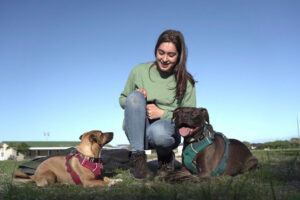
Based in Cape Town, Keelan is a COAPE accredited dog behaviourist and trainer who offers virtual and in-person behavioural assessments and training services for dogs and their guardians.
Keelan has attained several qualifications, including the COAPE CertAT, CertAB, and DipCABT levels, as well as a certification in Canine Nutrition through PetSense College.