
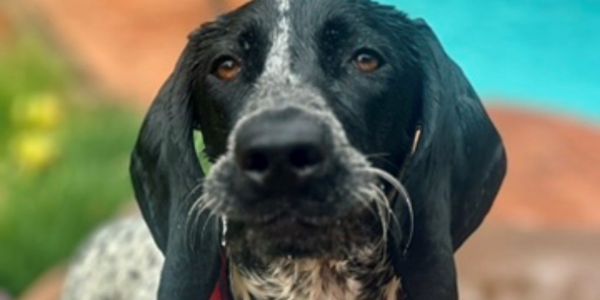
Dog leg amputation recovery: how Phoenix learnt to run again
Dog leg amputation recovery can lead to a full, active life, even for a high-drive working breed. When two-year-old German Shorthaired Pointer Phoenix lost her back leg to a mast cell tumour, her owner Carla promised she would lose no quality of life. With specialist vets, hydrotherapy, physio and patient training, Phoenix is now trail running, doing search and rescue work and still outpacing her brother.
A routine lump check that changed everything
On the 31st of March the unimaginable happened. I found a lump on the back of my 2-year-old German Shorthaired Pointer’s back left leg. She wasn’t sick, she wasn’t sore, I was doing a routine check on her (I do a lump check on my dogs weekly, sometimes more) and noticed the lump attached to what felt like her thigh muscle. After biopsies it was determined it was a subcutaneous mast cell tumour and although low grade, it had an infiltrative growth pattern which meant the vet could not get clear margins as it had infiltrated the areas surrounding the muscle. After the trauma of what I went through with my beautiful GSP Comet (I lost him at only 7 years old from Heamangiosarcoma, a very aggressive cancer), I was in complete shock that it seemed like this was all happening again.
Phoenix was only 2. This could not be the end of her story. With the advice of my local vet, Dr Daryll Hirshowitz (who is absolutely incredible), we piled Phoenix in the car (much to her brother Aero’s dismay, as I am sure he thought we were going somewhere exciting) and headed to Dr Miller at the Johannesburg Specialist Vet Centre. After looking through the scans and doing further staging he, along with specialist surgeon Dr Naude, it was decided that to give Phoenix her best shot at long term success we should amputate her leg. This decision was not made lightly, but due to her age and the fact it would give her the best chance at survival we decided to go ahead with the amputation. I didn’t know what to think or do but I was sure that no matter what Phoenix needed to be able to live the rest of her life (no matter how long) filled with adventure, runs, work and all her favourite things.
The surgery went off without a hitch, smooth sailing for Dr Naude. The cherry on top was the call to say they had achieved clear margins and she was effectively “cured” (I am keeping a close eye on her because she can be prone to more of the same tumour in other locations, but if she does develop new ones we will hopefully get them early).
What does recovery from a dog leg amputation look like?
Now, that’s not the story at all. The story is about fight, grit, resilience and determination, the kind I’ve never seem before. I promised myself and Phoenix that she would not lose any quality of life just because she lost a limb, and so far I would like to think I am holding true to that promise. Phoenix has gone from doing short 1km walks around the block to slowly doing all the amazing things she loved to do before she became a TriPawd.
It all started with some very wise words from my coach, trainer and mentor Manya from K9 Drive, who said to me:
“Carla, whatever you do, do not treat her differently”
and through those words and the incredible support from him, my search and rescue trainer Mike from Tame the Beast, from my amazing physio Ansi and the incredible team from Ramsay rehab, Phoenix is reaching new milestones every day.
What does recovery from a dog leg amputation look like?
THE EARLY WEEKS
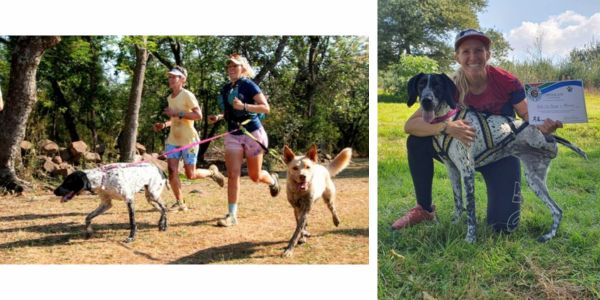
A typical week for her is a K9 Yoga session with Ansi once a week and a session with her every couple of months where she gets some needles and alignment, a hydrotherapy session with Ramsay Rehab every second week (it was weekly but now we have graduated to every second week), some at-home mobility exercises I do with her and Aero. It was tough at the beginning when she was still healing as her mind was good to go but physically, she needed to take it easy. I decided to take her back to training and search and rescue but have very controlled on leash sessions. With Manya we started with slow and short farm walks and with Mike at search, we did very short easy searches. Honestly the hardest part was keeping her from licking her wound. It still gets a bit itchy but having the cone of shame was her least favourite part of the experience.
BACK TO TRAINING, SLOWLY AND ON LEAD.
We now all run together again a few times a week, she is getting back to running further and more often. She had obedience training once every second week (her and Aero alternate) with Manya and search and rescue training most Sundays with Mike. Phoenix is a German Shorthaired Pointer, a high drive and high energy dog, so it is so important to keep her mentally and physically stimulated. It is what the breed requires and she only lost a leg, not her drive, so I am working hard at getting her back slowly and in a controlled way to ensure she has longevity in whatever she does.
Can a three-legged dog still run and work?
My two proudest moments of this journey have been her first 8km trail run where she looked so happy to be out there and now that she is joining the Wednesday Pirates trail running crew again, it feels like we have made it full circle.
My other proudest moment is not about Phoenix at all. Aero takes credit for this. To watch Aero navigate this journey has been somewhat surreal. When she first came home, he knew something was not right. He sniffed her, was supper happy to see her but was incredibly gentle. As Phoenix has built strength and become herself again, his level of play has increased based on her ability. They are now the power duo they used to be, as close as ever and believe it or not, Phoenix is still faster than Aero.
The part no one tells you: caring for yourself as well as your dog
BUT… here is the part no one tells you though. It has been really hard on me. The story seems glamorous. One of rising up and overcoming something really challenging. I wouldn’t wish this journey on anyone. For the first few weeks Phoenix would cry in pain, she would fall over, she would try to scratch herself and every time these things happened my heart broke a bit more. I couldn’t sleep, I worried all day. I looked at my beautiful girl full of life and the missing leg sometimes felt too much to handle. I still have all of these feelings. I have to keep going, I have to be strong for her but it is really hard at times. Aero helped me a lot, he largely kept me going, he needed his run, he needed training, he still needed me to be the same handler I was before, little did I know that Phoenix was planning on getting back every ounce of what she once had and I needed to be ready for her too.
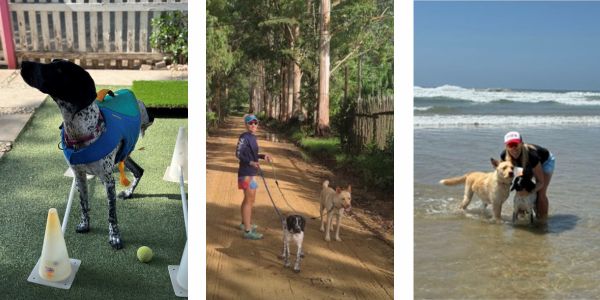
Phoenix at the moment is thriving. We are running up a storm again, she is slowly starting to get back into a bit of agility, she is on her way to achieving her BH and she is back at search training and will hopefully quality soon with her brother Aero.
Maybe my dogs found me
Sometimes I wonder why I have had such bad luck with my dogs. I lost a bit of myself when I lost Comet, but I found myself thinking the other day, maybe I haven’t had bad luck with my dogs, maybe my dogs have had good luck finding me, someone who will advocate for them, fight for them and give them everything they need to thrive, no matter what the circumstances.
This journey is hard, please feel free to contact me if you have been through something similar or want to know more. There is power in community and I could not have gotten myself or Phoenix to where we are now without an army behind me.
I am running a back a buddy for Phoenix to help cover vet bills and to help for all her rehab, if you can afford please consider a small donation.
Remember to fight like Phoenix!
VETERINARY DISCLAIMER: This article shares one pet parent’s personal experience and is intended for general information only. It is not a substitute for professional veterinary advice, diagnosis or treatment. Every dog is different. If you find a lump on your pet, or are facing a decision about surgery or cancer treatment, please consult your veterinarian or a veterinary specialist.
Carla Lea Farina is a search and rescue handler, trail runner and proud mom to Aero and German Shorthaired Pointer Phoenix.
FAQ Section
Q: How long does dog leg amputation recovery take?
A: Most dogs are up and walking within a day or two of surgery and the incision usually heals in about two weeks. Full dog leg amputation recovery, including rebuilding strength and confidence, generally takes several weeks to a few months. Rehab such as hydrotherapy and physiotherapy can help. Your vet will guide you on a safe timeline for your dog.
Q: Can a three-legged dog still run and play?
A: Yes. Many tripawds go back to running, playing and even working. Phoenix, a German Shorthaired Pointer, returned to 8km trail runs and search and rescue training after her amputation. The key is a slow, controlled return to activity, good muscle conditioning and keeping your dog at a lean, healthy weight to protect the remaining joints.
Q: Will my dog have a good quality of life on three legs?
A: Most dogs adapt to life on three legs far better than their owners expect, because they don’t share our ideas about how a body should look. With good pain management, rehab and support, many tripawds live full, happy lives. Your vet can assess whether your dog is a good candidate based on age, weight, joint health and overall condition.
Q: What is a mast cell tumour in dogs?
A: A mast cell tumour is one of the most common skin tumours in dogs. It can look or feel like a harmless lump, so any new lump should be checked by a vet, who will usually take a sample to identify it. Treatment depends on the tumour’s grade and spread and may include surgery, sometimes amputation if the tumour is on a limb.
Q: How can I help my dog after leg amputation surgery?
A: In the early weeks, keep exercise short and controlled, stop your dog licking the wound, and put down non-slip mats on smooth floors. As healing progresses, ask your vet about canine physiotherapy or hydrotherapy to build strength. Supporting your dog through dog leg amputation recovery also means looking after yourself, so lean on your vet, rehab team and community.