
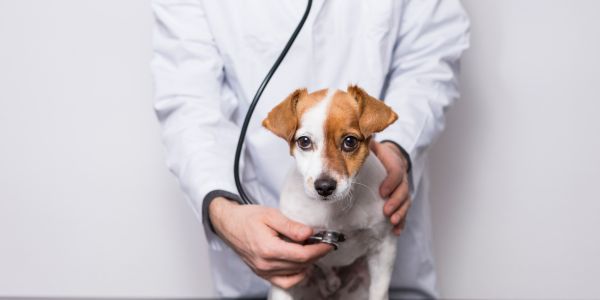
How to make vet visits happier for your anxious dog
Happier vet visits are possible for every dog, even those who currently tremble, freeze or try to pull away at the clinic door. Vet visits are frequently one of the most stressful experiences in a dog’s life, but with a little understanding, preparation and force-free training, that fear can be prevented or gradually reduced. This article explains why dogs find veterinary care so overwhelming, and shares practical, at-home steps South African pet parents can start using today.
For most of us, vet visits are unavoidable. Our puppies need vaccinations. Our adult dogs need check-ups and, sooner or later, as our dogs become seniors, illness or injury means more frequent appointments. For many dogs (and their people), going to the vet can actually be one of the most stressful parts of life. We have all had or seen a dog that pulls away from the veterinary clinic door or freezes on the scale. They might tremble throughout the visit and some dogs may even bark, growl or snap at the vet. This is something that many of us just quietly accept and we think that “this is just how dogs are”.
But it doesn’t have to be that way!
We can make vet visits safer, calmer and maybe even fun with education, training, preparation and a shift in how we think veterinary care should be done.
Why are vet visits so hard for dogs?
To be able to change how our dogs feel about vet visits, we need to understand why they are challenging in the first place. And we need to do this from a dog’s perspective, their umwelt.
Veterinary clinics combine things that dogs find distressing. There are unfamiliar smells (including stress and fear from other animals), slippery floors and strange equipment (that may make strange sounds), close handling and restraint, invasive procedures, unpredictable movement and touch, pain or discomfort and an incredible loss of choice and control. Dogs don’t understand that vet visits are meant to help them. They live in the ‘now’ and don’t understand that even if they experience pain (like an injection) or fear now, it will end after the visit. We can’t reason that out with them like we would with humans. Dogs also learn through experience and repeated visits that involve fear, restraint, pain or discomfort, resulting in them forming really strong negative associations. Mild anxiety can develop into extreme anxiety and aggression. The responses that they have do not mean that they have “bad behaviour”. Their behaviour is normal and is their attempt to cope with overwhelming situations.
Importantly, dogs don’t need repeated trauma for a negative association to occur. Just one or even a few intense or poorly managed experiences can be enough to shape how a dog feels about veterinary care and handling for years to come.
Prevention is easier than ‘cure’
One of the clearest lessons from behaviour science is this: It is far easier to prevent fear than to undo it.
We know that puppies are especially sensitive to learning during their early development periods, but dogs of any age benefit from proactive preparation. We need to think not only about their physical health, but also about their behavioural health and, as such, their welfare.
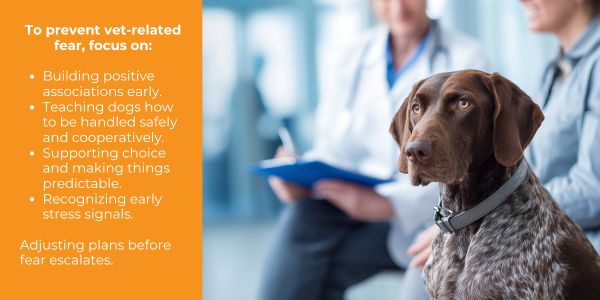
What does a "good" vet visit actually look like?
A better vet visit doesn’t necessarily mean that your dog enjoys every moment, but it does mean that your dog stays below threshold, that handling is gradual and predictable, that you notice and respect your dog’s communication (body language), that you adapt procedures where possible and that you focus on helping your dog feel safe.
It is important to note that a dog that looks calm might not actually be calm. When you observe stillness or freezing, it can indicate fear. The body language we want to see at the vet’s office is a loose body and tail, willingness to eat, curiosity and the ability to disengage and re-engage. Being able to read your dog’s body language is the first step to improving vet visits.
Preparing at home: where happier vet visits begin
TEACH YOUR DOG THAT TOUCH AND RESTRAINT PREDICTS GOOD THINGS
One big challenge at the vet is the handling that often needs to be done. At home, we usually touch our dogs in familiar, pleasant ways, but at a clinic, it can be unpredictable, invasive and possibly painful. Training this before you need it is part of being proactive, so that handling always predicts something positive.
A simple “touch and treat” approach works well here:
- Start by touching an area your dog already enjoys, such as their chest or shoulders. Do not immediately start touching their paws, for example, if they don’t enjoy that. The trick here is to work slowly and gradually.
- Keep your touch very brief. If you notice any body language that indicates that your dog may be uncomfortable, you may want to keep the duration of the touch even shorter.
- Immediately give a treat when you remove your hand. The timing between the touch and the treat needs to be short. Make sure you’re giving that treat within 3 seconds.
- Pause and allow your dog to relax.
- Repeat.
Gradually, you can move to less familiar areas like paws, legs, ears, tails and eyes, but always keep your training sessions short and stop if your dog shows any discomfort. Be slow to progress and train consistently.
TRAIN VET SKILLS AS SKILLS
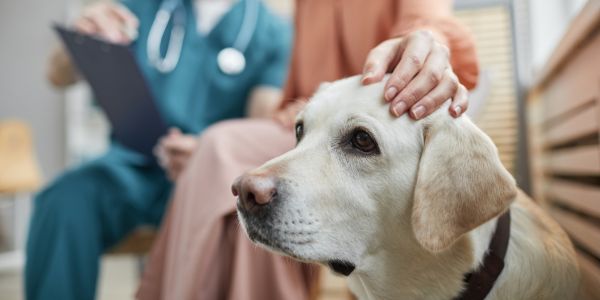
Think about what happens during a routine examination at the vet: standing still, being held, having paws lifted, ears checked, eyes checked, or mouth examined. Write out a list if you’d like to be thorough and then start training for these so they are not surprises when your dog visits the vet.
LIFT PAW – TREAT – RELEASE
HOLD COLLAR BRIEFLY – TREAT – RELEASE
LOOK IN AN EAR – TREAT – RELEASE
Remember to start with things that your dog will be comfortable with and progress to the more difficult handling as they start to become more comfortable. Keep a keen eye out for any body language that could indicate that you are progressing too quickly. Go back a step if you notice lip licks or whale eyes, as that means that your dog is not comfortable. Over time, dogs gradually learn that handling leads to good outcomes and that it is not something to be scared of.
MAKE THE CARE (AND CARRIER) LESS STRESSFUL
For many dogs, stress begins at home before they even arrive at the vet clinic. Car rides and carriers should not only predict vet visits (i.e. something really stressful).
To Change this:
- Take car rides to fun destinations.
- Feed treats, chews or meals in the car.
- Leave carriers out at home with bedding and treats.
- Practice entering and exciting the car without going anywhere.
Breaking the “car equals vet” association can significantly reduce stress.
Your dog does not need to love the vet but ideally they should feel safe enough to cope. Happier vet visits are built through preparation, collaboration and gradual training. We want to shift our focus from “getting it done” to “doing it well” and as stress-free as possible. How our dogs feel during veterinary care matters as well.
In Part 2, Angelique will show you how to plan the vet visit and set everyone up for success.
You will find the article in the February 2026 Magazine. READ IT HERE
DISCLAIMER: This article is for educational purposes and reflects general force-free training guidance. It is not a substitute for individual veterinary or professional behavioural advice. If your dog shows signs of significant fear, anxiety or aggression, please consult your veterinarian or a qualified force-free behaviour professional.

FAQ Section
Q: Why is my dog scared of the vet?
A: Vet clinics combine many things dogs find distressing: unfamiliar smells, slippery floors, restraint, invasive handling and a loss of choice and control. Dogs live in the present and can’t reason that discomfort will pass, so fear and pain during a visit can quickly form strong negative associations, especially after just one difficult experience.
Q: How can I make my dog’s vet visits less stressful?
A: Start at home with short, positive training sessions. Teach your dog that touch predicts good things using a simple touch-and-treat approach, practise handling like ears, paws and mouth checks, and make car rides and carriers feel safe rather than only linked to vet trips. This builds toward happier vet visits over time.
Q: How do I know if my dog is stressed at the vet, even if they seem calm?
A: A dog that looks still or frozen isn’t necessarily calm. Stillness can actually indicate fear. Watch for loose, relaxed body language, a willingness to eat treats, curiosity and the ability to disengage and re-engage, as these are better signs that your dog feels safe.
Q: Can vet-related fear in dogs be prevented?
A: Yes. Behaviour science shows it’s far easier to prevent fear than to undo it. Building positive associations early, teaching cooperative handling, supporting choice and predictability and recognising early stress signals can all help prevent vet-related fear from developing in the first place, in dogs of any age.
Q: What does a good vet visit look like for a dog?
A: A good vet visit doesn’t mean your dog enjoys every moment, but that they stay below their stress threshold, handling is gradual and predictable, their communication is respected, and procedures are adapted where possible. The goal is for your dog to feel safe enough to cope, not necessarily to love the experience.
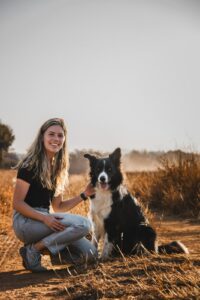
I’m Angelique, an animal behaviour consultant, trainer, and founder of Treat to Train. My journey into animal training began in 2017 with my first puppy (a greyhound) and quickly grew into a lifelong passion. After being invited to assist with training classes, I discovered just how powerful positive, science-based training can be in transforming behaviour and strengthening the bond between dogs and their humans. This passion led me to establish Treat to Train, which has since grown into a wonderful team of trainers across Pretoria and Johannesburg. We offer both in-person and online training.