
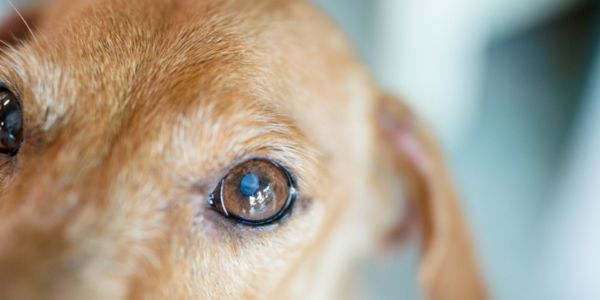
What is nuclear sclerosis in dogs?
Nuclear sclerosis in dogs is one of the most common and most misunderstood age-related eye changes, causing a blue-grey haze that many pet parents mistake for a cataract or early blindness. In most cases, it’s a harmless part of ageing that doesn’t affect vision or cause pain. We asked veterinary ophthalmologist Dr. Lo-An to answer the ten questions South African pet parents ask most, so you know exactly what’s normal and when it’s time to book a check-up.
As our dogs age, spotting changes in their appearance can be a source of worry for pet parents, especially when it comes to their eyes. Noticing a hazy film can instantly trigger fears of blindness, but many senior changes are entirely natural. In this edition, we sit down with Dr. Lo-An to clear up the confusion around a very common age-related eye change: Nuclear Sclerosis. Read on as Dr. Lo-An answers your most pressing questions about how to spot it, how it differs from cataracts and when you actually need to worry.
1. My dog's eyes look cloudy. My vet says it could be Nuclear Sclerosis. Is this normal aging or something more serious?
Most often it’s normal aging. Nuclear Sclerosis, or “lenticular sclerosis,” is a hardening and compaction of the lens fibres that happens in middle-aged to senior dogs. Think of it like your lens getting “densely packed” over time. It looks like a blue-grey haze in the centre of the eye. It’s very common and not the same as disease.
2. What is the difference between nuclear sclerosis and cataracts?
This is the big one owners mix up.
- Nuclear Sclerosis: Age-related change. The whole lens becomes slightly more dense and reflective. It’s usually symmetrical in both eyes and has a translucent, bluish-grey look. Light can still pass through well.
- Cataract: A true disease where the lens fibres become opaque. It looks white, milky and blocks light. Cataracts can cause significant vision loss.
A vet or ophthalmologist uses a bright light and magnification to tell them apart.
3. Does NS affect my dog's vision or cause any pain?
Usually no. Most dogs with nuclear sclerosis see just fine and have zero pain. Their night vision might be slightly reduced because less light gets through, but they adapt incredibly well. If your dog is bumping into things or squinting, that’s NOT typical for NS and we need to check for something else.
4. At what age does NS typically start?
We usually start seeing it around 6-8 years old, but it depends on the dog. Some large breeds show it earlier, some small breeds later. By 10+ years, most dogs have some degree of it.

5. Are there some breeds more prone to it?
Not really “prone” like with cataracts. It’s more of a universal aging change. But because large breeds tend to age faster, we may notice it sooner in Labs, Goldens and Shepherds. Small breeds might not show it until 10-12 years.
6. How would an eye specialist diagnose NS?
We do a full eye exam with:
- Bright light + magnification: To look at the lens and see if it’s a diffuse haze vs a white opacity.
- Menace response, dazzle reflex: To check vision is still good.
- Tonometry: To rule out glaucoma, since pressure problems can also cause cloudiness.
Often, we can diagnose it in 2 minutes at the exam.
7. Does NS require treatment, medication or surgery?
No. There’s no treatment, drops or surgery for nuclear sclerosis because it’s not a disease and doesn’t cause pain or blindness. We don’t operate on it. Surgery is only for cataracts that are causing blindness.

8. Is there anything I should be doing at home to manage it?
Just normal senior dog care:
- Keep their environment consistent so they don’t bump into things at night
- Keep up with regular vet checkups
- Good diet and antioxidants support overall eye health, but won’t reverse NS
9. Will it get worse over time?
Yes, slowly. The haze will gradually become a bit denser as your dog ages. But it typically plateaus and rarely progresses to the point of affecting daily vision.
10. Are there any other abnormal changes I should look out for that may require intervention?
Yes, call your vet right away if you see:
- White/cloudy spots instead of blue-gray haze → could be cataract
- Redness, squinting, tearing, pawing at eyes → pain, ulcer or glaucoma
- Sudden vision loss, bumping into things in daytime → not typical for NS
- One eye cloudier than the other → needs to be checked
- Eye looks bigger or dog seems painful → emergency
Bottom line: Nuclear sclerosis is usually just a sign your dog is getting their “senior glasses.” It’s very different from a cataract. If you’re ever unsure, an ophthalmologist can confirm it in one visit and rule out anything painful.
DISCLAIMER: This article is for educational purposes only and is not a substitute for professional veterinary advice, diagnosis or treatment. If you’re concerned about your dog’s eyes or any other symptoms, please consult your veterinarian or a veterinary ophthalmologist.

FAQ Section
Q: Is nuclear sclerosis in dogs serious?
A: Nuclear sclerosis is usually normal ageing, not a disease. It’s a natural hardening of your dog’s lens that creates a blue-grey haze, most common from around age 6-8 onward. Unlike cataracts, it rarely affects vision or causes pain. Your vet can confirm it with a quick eye exam using bright light and magnification.
Q: How can I tell if my dog has nuclear sclerosis or cataracts?
A: Nuclear sclerosis gives a translucent, symmetrical blue-grey haze in both eyes and dogs still see well. Cataracts look white and milky, can block light and often cause real vision loss. Only a vet or ophthalmologist using bright light and magnification can tell the two apart with certainty, so a check-up is always worthwhile.
Q: Does nuclear sclerosis make my dog go blind?
A: No. Most dogs with nuclear sclerosis have no pain and normal daytime vision, though night vision may be slightly reduced. If your dog is squinting, bumping into things or seems uncomfortable, that is not typical of nuclear sclerosis and warrants an urgent vet visit to rule out another cause.
Q: Can nuclear sclerosis be treated or reversed?
A: No, nuclear sclerosis needs no treatment, drops or surgery, since it isn’t a disease and doesn’t cause blindness. Surgery is reserved for cataracts affecting vision. At home, focus on normal senior dog care: consistent surroundings, regular vet checkups and a good diet with antioxidants to support overall eye health.
Q: Does nuclear sclerosis get worse over time?
A: Yes, it typically progresses slowly and gradually as your dog ages, but it usually plateaus and rarely affects daily vision. Call your vet promptly if you notice redness, squinting, tearing, sudden vision loss, one eye cloudier than the other or if your dog’s eye looks painful or swollen, as these are not signs of nuclear sclerosis.

Oday Vets is a family-collaboration practice founded to bring specialized veterinary ophthalmology and animal behaviour services to Centurion and the surrounding communities. At the heart of its specialized eye care is Dr. Lo-A, a highly respected veterinary ophthalmologist with nearly two decades of experience as a veterinarian.
After years of dedicated work in the field, Dr. Lo-An established Vet Vision and consults from Oday Vets on a regular weekly basis. Her professional footprint spans multiple environments: she divides her time consulting at Valley Farm Animal Hospital in Pretoria East and Oday Vets in Centurion, alongside active field work treating horses and wildlife.
Dr. Lo-An’s enthusiasm for veterinary medicine and her patients remains entirely steadfast. Known for her gentle approach and dedication to preserving and restoring vision, she is immensely appreciated by her clients for making complex eye care understandable and supporting them and their pets through every step of the healing journey.