
Spring Reset: Renewing Your Relationship With Your Pet
Pet behaviour changes are rarely random. They’re usually a sign that something about your dog or cat’s world, health or emotional state has shifted. This spring, animal behaviour consultant Ilse Fourie encourages South African pet parents to pause and really look at their pets again, not with guilt, but with curiosity. Small shifts in routine, touch and environment can make a meaningful difference to a pet’s comfort, trust and overall wellbeing.
Spring has a way of making us look at the world with fresh eyes.
We tidy cupboards, the forgotten drawers, the garden shed or the garage. We notice what has been neglected over winter and we often feel the pull to reset, refresh and begin afresh. What if we used spring not only to reset our homes, but also to reset our relationship with our pets?
Not in a dramatic way. Not by buying everything new or trying to become a “perfect” pet guardian overnight. What if we do it by pausing long enough to ask a simple and important question:
Who is my pet now and what do they need from me today?
Like the seasons, our pets are not static. They change with age, health, season, environment, learning and life experience. The puppy becomes an adolescent. The adolescent becomes an adult. The adult becomes a senior. The confident cat may become more sensitive after illness. The easy-going dog may become less tolerant when in pain. The newly adopted pet may only start showing their real needs once they feel safe enough to do so.
Sometimes the kindest thing we can do is stop assuming we already know them completely.
What does good pet welfare actually include?
Most pet guardians love their animals deeply. However, love alone does not always tell us whether our pet’s needs are being fully met.
Good welfare is not only about food, water, shelter and veterinary care, although these are essential. It includes comfort, safety, emotional wellbeing, freedom from fear and distress, opportunities for normal species-specific behaviour, rest, choice, predictability and positive relationships.
A dog who is fed and loved may still be frustrated if they never get to sniff, explore or move their body in ways that meet their needs.
A cat who has a warm home may still be stressed if they have no safe hiding places, no vertical space, no control over interactions, or no peaceful access to their litter tray.
A senior pet who sleeps more may not simply be “getting old”; they may be painful, anxious, under-stimulated, or struggling with changes we have not yet noticed.
This is why a spring reset can be so valuable. It gives us a reason to look again.
Not with guilt but with curiosity.
Start by observing, not changing
Before we rush into new routines, new toys or new plans, we need to observe.
Spend a few days simply watching your pet more closely.
- Where do they choose to rest?
- When do they seem most relaxed?
- When do they avoid interaction?
- What makes them brighten?
- What makes them hesitate?
- Are they moving comfortably?
- Are they sleeping more or less?
- Are they seeking more contact, or less?
- Are they showing signs of stress that have become easy to miss?
Observation is one of the most underrated parts of good guardianship.
Our cats and dogs communicate constantly through body language, movement, posture, behaviour, appetite, sleep, play and social choices. When we pay attention to these small details, we often notice needs before they become problems.
Behaviour is communication. The question is whether we are listening.

How do I reset my dog or cat's routine after winter?
Winter often changes household rhythms. Walks may become shorter, play may happen less often and everyone may spend more time indoors. Our pets may become less active, more frustrated, more clingy or more withdrawn. Spring gives us an opportunity to gently reassess the routine.
For dogs, this may mean bringing back more sniffing walks, decompression time, training games, safe social opportunities or calm enrichment. It does not need to mean long, exhausting walks or high-intensity ball throwing. Dogs benefit more from slow, choice-based walks where they are allowed to sniff, pause and gather information.
For cats, it may mean adding short interactive play sessions, rotating toys, improving access to sunny resting areas, adding scratching options or making sure food, water, litter trays and resting places are not all crowded into one busy space.
- Small changes can make a big difference, such as:
- A predictable morning routine.
- A quiet resting place.
- A five-minute play session.
- A sniffing game before work.
- A cardboard box in the right spot.
- A sniffy walk where your dog can just enjoy being a dog.
These are not luxuries. They are ways of meeting behavioural needs.
Does your pet actually enjoy being touched?
Many of us show love through touch, so we stroke, cuddle, pick up, kiss, groom, hug or hold our pets close. Some animals enjoy this. Some enjoy it only at certain times. Some tolerate it because they have learned they have little choice in the matter.
A spring relationship reset is a good time to ask: does my cat or dog actually enjoy the way I physically interact with them and touch them?
What we need to remember is that consent and choice matter in human-animal relationships.
This does not mean we never handle our pets. Grooming, veterinary care, medication, harnesses etc. may all be necessary. However, it does mean we should pay attention to how our pets respond.
- Does your dog lean in, soften and choose to stay?
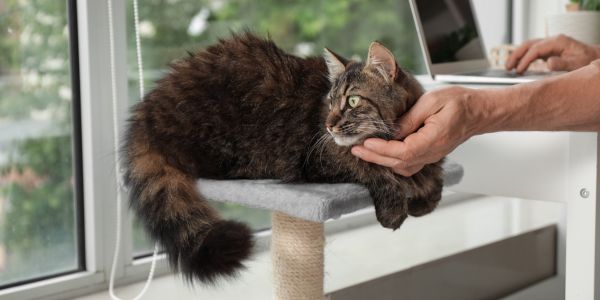
- Does your cat lift their head, purr with a relaxed body and return for more?
- Or do they turn away, freeze, lick their lips, flick their tail, move off, become tense or avoid you afterwards?
Respecting small “no thank you” signals builds trust.
For many animals, being allowed to move away is exactly what makes them feel safe enough to come closer next time.
Is your home welfare-friendly from your pet's perspective?
Our homes are designed for human convenience and our pets experience those same spaces very differently.
- A dog may find slippery floors difficult to navigate.
- A cat may feel unsafe eating beside another cat.
- A senior pet may struggle to reach a favourite couch.
- A nervous dog may have no quiet place away from visitors.
- A cat may have to pass a dog to reach the litter tray.
Try walking through your home as if you were your pet.
- Can they rest without being disturbed?
- Can they access food and water safely?
- Can cats reach elevated spaces?
- Are litter trays private, clean and easy to access?
- Are there safe spaces where they can retreat to?
- Can older pets move around without slipping or jumping painfully?
- Are multiple pets forced to share resources too closely?
A welfare-friendly environment does not have to be fancy, it just needs to be considered.
Rebuild connection through small moments
Sometimes our relationship with our pets becomes very functional.
- Feed the dog.
- Clean the litter tray.
- Stop the barking.
- Get through the walk.
- Give the medication.
- Rush to work.
- Come home tired.
Life happens. After all, we are only human. However, connection is often rebuilt in small, ordinary moments.
- Sitting quietly with your cat without forcing interaction.
- Letting your dog sniff instead of rushing through the walk.
- Noticing when your pet asks for space.
- Playing for five minutes before checking your phone.
- Rewarding calm behaviour you usually overlook.
- Speaking gently during care tasks.
- Giving your pet a choice where choice is possible.
These moments tell our animals: “I see you. I am listening. You are safe with me.” And that is the foundation of trust.

Could pain be behind your pet's behaviour change?
If your pet’s behaviour has changed, spring is also a good time to consider a veterinary check.
Pain and discomfort are commonly overlooked in behaviour changes. Our dogs and cats do not always cry out, limp clearly or show obvious signs. They may simply become less tolerant, less playful, more withdrawn, more reactive, more clingy, or more reluctant to do things they used to do easily.
- A dog who no longer wants to jump into the car may be sore.
- A cat who swats when touched near the back may be painful.
- A pet who becomes irritable with children or other animals may be struggling physically.
- A senior animal who “just sleeps more” may need support for pain, mobility, sensory changes or cognitive decline.
Behaviour and health are deeply and intrinsically connected. If behaviour changes, physiology should always be part of the conversation.
Ask better questions, not "why is my pet difficult?"
A relationship reset is not about finding fault. It is about asking better questions.
Instead of: “Why is my pet being difficult?”
Ask: “What is my pet finding difficult?”
Instead of: “How do I stop this?”
Ask: “What need is this behaviour communicating?”
Instead of: “Why won’t they listen?”
Ask: “Do they feel safe enough to learn?”
Instead of: “They used to cope with this.”
Ask: “What may have changed for them?”
These questions move us away from judgement and towards understanding. And understanding is where good behaviour support begins.
Final Thoughts
Spring is a season of renewal, but renewal does not have to mean starting over. Often it means noticing more.
It means recognising that our pet in front of us today may not have the same needs they had a year ago. It means making small changes that support comfort, choice, safety, enrichment and trust.
Our pets do not need perfect people. They need people who are willing to keep learning, keep listening and keep adjusting as their needs change.
This spring, take a moment to look at your pet with fresh eyes.
Not just as the dog or cat you love, but as an individual with their own emotional world, preferences, sensitivities and needs.
Renewing your relationship may begin with something very simple:
- Pause.
- Observe.
- Listen.
- And ask, “What do you need from me now?”
DISCLAIMER: This article is for educational purposes only and is not a substitute for professional veterinary or behavioural advice. If you notice a change in your pet’s behaviour, please consult your veterinarian to rule out any underlying medical cause.

FAQ Section
Q: Why has my dog’s behaviour suddenly changed?
A: Sudden pet behaviour changes are often linked to pain, stress, a change in routine or an unmet need such as exercise, rest or safety. Dogs rarely show obvious signs of discomfort, so subtle shifts like reluctance to jump, less tolerance or withdrawal are worth taking seriously and discussing with your vet.
Q: Why is my cat acting differently all of a sudden?
A: Cats are highly sensitive to change and often show stress through subtle signs such as hiding, reduced appetite, over-grooming or avoiding the litter tray. These pet behaviour changes can signal illness, pain or an environment that no longer feels safe, so a vet check is a sensible first step.
Q: Can pain cause behaviour changes in dogs and cats?
A: Yes. Pain is one of the most commonly overlooked causes of behaviour change in pets. Animals rarely cry out or limp obviously and instead may become less playful, more irritable, more withdrawn or reluctant to do things they previously managed easily, such as jumping into a car.
Q: How do I know if my pet’s needs are being met?
A: Good welfare goes beyond food, water and shelter. It includes comfort, safety, rest, choice, predictability and the chance to express normal species-specific behaviours like sniffing, exploring or scratching. Observing your pet’s body language and daily choices over a few days is the best way to check this.
Q: Why does my dog or cat avoid being touched sometimes?
A: Pets don’t always enjoy touch in the same way or at the same moments we do. Turning away, freezing, lip-licking or tail-flicking are all polite “no thank you” signals. Respecting these small cues, rather than pushing through them, builds trust and makes pets feel safer around you.
Ilse Fourie (CBCC-KA, DipCAB, CertCAB, MA)

Ilse Fourie is a qualified and an internationally credentialed animal behaviour consultant and the founder of No Fret Vet and Pet Care Consulting in South Africa. As a Fear Free Elite Certified Professional, Ilse has dedicated her career to bridging the gap between clinical science and the lives of real pets. Her work focuses on a “whole-animal” approach, integrating stress physiology, gut health, and environmental factors to alleviate fear and anxiety. Whether she’s coaching veterinary teams or helping pet parents at home, Ilse’s mission is simple: to help animals feel safe and to empower their humans with the science-informed tools to keep them that way.