
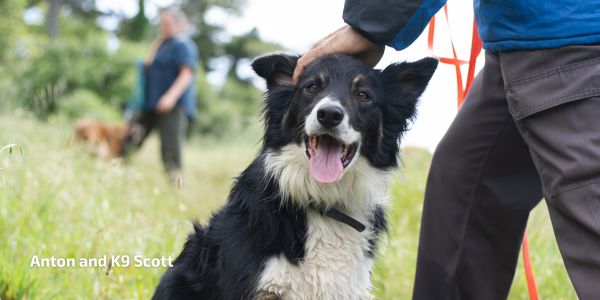
What do search and rescue dogs in South African actually do?
Search and rescue dogs in South Africa are highly trained scent specialists, not emotionally burdened heroes. Behind every deployment is a team that trains for years, a dog motivated by reward and play rather than the gravity of the situation and a handler who carries the emotional weight the dog never feels. Understanding how this work really happens matters for the dogs, for the teams and for the families waiting for answers.
Picture a search dog at work. If your first thought is a dramatic helicopter scene, an emotional reunion, or a dog who somehow senses the gravity of what it is doing, you are not alone. Those images dominate social media, news coverage and film. They are also, for the most part, misleading.
Search and rescue is far more methodical than most people realise. Behind every deployment is a team of handlers, support crews, planners and dogs who train consistently for years to assist in the search for missing people. Some dogs are trained to locate living people. Others specialise in human recovery work during recovery operations. All of them do this work because, to them, it is deeply rewarding.
But because the work is emotional, highly visible and widely shared online, misconceptions about search dogs are common. People naturally interpret what they see through human emotion, a focused dog looks worried, a difficult search seems traumatic and a recovery operation feels heartbreaking.
The reality is different. And understanding that difference matters, for the dogs, for the teams who work with them and for the families who depend on them.
Why searching is a game, not a tragedy.
One of the most persistent myths about search dogs is that they become depressed when they do not find someone alive. It is an understandable assumption. Humans project their own emotional responses onto the animals they care about. But a well-trained search dog experiences the work very differently from the people involved.
Search dogs are trained using reward-based systems. From an early stage, they learn that using their nose, locating a target scent and performing a trained alert leads to something they value. A favourite toy, a game of tug or praise from their handler. Over time, the act of searching itself becomes intensely rewarding. The dog is not looking for a happy ending in the human sense. It is solving an odour puzzle, working closely with the person it trusts most and doing the thing it has been built and trained to love.
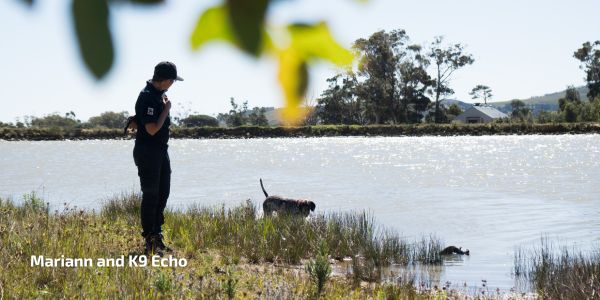
This is why many search dogs become visibly excited when it is time to work. Handlers often describe the moment the harness goes on as a switch being flipped. The dog knows what is coming and it cannot wait to begin.
That does not mean the work is trivial. These are highly trained working animals operating in difficult, sometimes dangerous environments. But emotionally, the dog remains focused on the task and the reward, not the broader meaning humans attach to the situation.
What is an HR Dog?
If searching for living people sounds demanding, there is a discipline within search and rescue that the public finds even harder to understand: Human Recovery Dogs, or HRDs.
HR dogs are specially trained to detect the scent associated with human decomposition during recovery operations. For people unfamiliar with this world, that can sound confronting. It is one of the reasons misconceptions around HR work are so persistent.
Many people assume these dogs must be emotionally harmed by what they encounter, or that they somehow understand death the way humans do. Neither is true. An HRD is trained to recognise a specific scent profile and communicate its presence through a learned alert behaviour. In principle, this is no different from other specialist detection dogs trained to locate narcotics, explosives or wildlife products. The dog is responding to odour, not emotion.
Dogs are highly attuned to human body language and handlers working recovery operations are often acutely aware of the emotional weight of what they are doing. But the dogs themselves remain engaged with the task they have been trained and rewarded to perform. For many HR dogs, the work is just as motivating as any other search discipline.
How does scent detection work in dogs?
Search dogs do not guess where someone is. They work scent and the science behind how they do it is remarkable.
Humans constantly release tiny particles into the environment through breath, skin cells, sweat and clothing. We cannot smell these particles ourselves, but a dog’s olfactory system is extraordinarily sensitive. A search dog is not tracking footprints the way films suggest. It is reading how human scent moves through the environment, carried by wind, shaped by terrain, affected by temperature, humidity and vegetation.
In favourable conditions, a dog may detect human scent from a significant distance. In difficult environments (dense bush, extreme heat, urban areas with competing odours) scent becomes far harder to work. This is why search and rescue is both a science and a craft. Handlers learn how terrain and weather influence scent movement, while also learning to read subtle changes in their dog’s behaviour.
A raised head, a sudden change in direction, a shift in intensity, these cues tell the handler the dog has encountered something. The two work as a team, each relying heavily on the other.
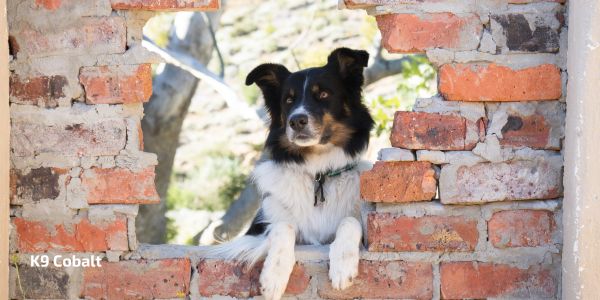
How long does it take to train a search and rescue dog?
Another common misconception is that search dogs are simply gifted pets who happen to have good noses. While certain dogs do have the drive, confidence and resilience that make them strong candidates, becoming an operational search dog requires years of structured, consistent training.
Dogs train regularly across wilderness areas, urban environments, rubble sites and disaster simulations. Exercises may involve hidden volunteers, complex scent problems, night work, difficult terrain and long operational days, all designed to safely prepare teams for real deployments. Training is carefully structured to build confidence and motivation over time. Dogs are never simply expected to figure it out.
Not every dog is suited to this work and not every handler is either. The process requires commitment, physical fitness, teamwork and a deep understanding of canine behaviour. For operational teams, training never truly stops.
Does every search end in a rescue?
This is perhaps the most important thing the public needs to understand about search and rescue and the one most at odds with how the work is usually portrayed.
Films and social media overwhelmingly show the dramatic find, the emotional reunion. In reality, some searches begin as rescue operations and later become recovery operations. Others involve vulnerable missing persons where environmental conditions, terrain or time create enormous challenges. Sometimes people are found alive. Sometimes they are not found at all.
One of the most valuable things a search dog does is not only help locate a missing person, it helps teams understand where a person is not.
Search dogs allow areas to be effectively cleared by indicating whether human scent is present within a search zone. This helps teams make informed decisions, eliminate low-probability areas and direct limited resources to where they are most needed. In many real-world deployments, this is one of the most critical contributions a dog team makes.
It is actually relatively rare for an operational search dog to make a find during a real deployment. Missing person searches are often vast, environmentally complex and influenced by factors far beyond any team’s control. That does not mean the search failed.
Providing answers to families matters. Finding a missing person matters. Confirming that an area has been thoroughly searched matters. Even ruling out areas can be critically important for investigators and emergency services. Search and rescue is not measured by dramatic outcomes alone. It is measured by disciplined operations, professionalism and providing the best possible information to move the search forward.
The emotional weight that handlers carry.
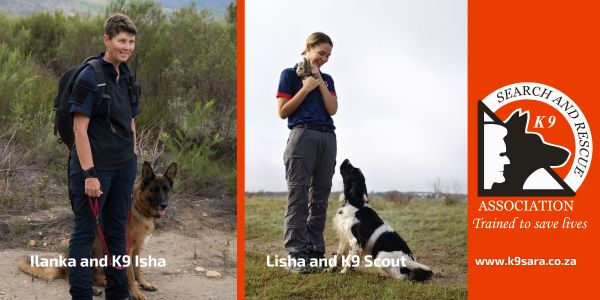
While the dogs focus on the task, it is the handlers who carry the emotional meaning of the outcome.
Searches can involve exhausted families, dangerous environments, confronting scenes and long operational hours. Handlers must remain focused and professional while managing their own wellbeing alongside that of their dog. Many handlers describe a strange duality in the work, the dog beside them is energised and engaged, while they themselves are acutely aware of what is at stake.
This is why welfare within search and rescue extends well beyond the dogs. Operational dogs are carefully managed: rest cycles, hydration, nutrition, veterinary oversight and recovery are all prioritised and dogs showing signs of fatigue are rested immediately. But handlers also rely on teamwork, debriefing and peer support after difficult deployments. For particularly challenging searches, professional counselling may be available. The long-term sustainability of any search and rescue team depends on looking after both ends of the lead.
More than a hero story.
Search and rescue dogs are extraordinary, but not because they are mystical, emotionally burdened heroes.
They are highly trained working partners performing a specialised task built on trust, repetition, scent science and an exceptionally strong bond with their handler. For the dogs, searching is purposeful play. For the handlers and the families waiting for answers, the stakes could not be higher.
Search and rescue lives in the space between those two realities. Understanding that does not make the work less remarkable. It makes it more so.
You will find the article in the June 2026 Magazine. READ IT HERE
DISCLAIMER: The welfare of working dogs varies between organisations and deployments. If you are interested in supporting search and rescue dog welfare in South Africa, visit k9sara.co.za for more information on how operational teams are managed.

FAQ Section
Q: Do search and rescue dogs get depressed when they don’t find someone alive?
A: No. Well-trained search and rescue dogs experience their work as a game, not a tragedy. They are trained using reward-based systems, so the act of searching itself; following scent, locating a target and performing an alert, is deeply motivating. The dog is focused on the task and the reward, not the emotional outcome that humans attach to the situation.
Q: How long does it take to train a search and rescue dog in South Africa?
A: Becoming an operational search and rescue dog takes years, not months. Dogs train consistently across wilderness areas, urban environments, rubble sites and disaster simulations. The process requires commitment from both the dog and the handler and for operational SAR teams, training never fully stops even after certification.
Q: What is a Human Recovery Dog and how is it different from a regular search dog?
A: A Human Recovery Dog (HRD) is specially trained to detect the scent associated with human decomposition during recovery operations. In principle, this is no different from other specialist detection work. The dog learns to recognise a specific scent profile and communicate its presence through a trained alert behaviour. HRDs do not experience the work as emotionally distressing; they respond to odour, not to the meaning humans attach to the situation.
Q: How do search and rescue dogs detect human scent?
A: Humans constantly release microscopic particles into the environment through breath, skin cells, sweat and clothing. A search and rescue dog’s olfactory system is extraordinarily sensitive, allowing it to detect and track how human scent moves through the environment, carried by wind, shaped by terrain and affected by temperature, humidity and vegetation. This is far more sophisticated than the footprint-tracking depicted in films.
Q: If a search dog doesn’t find the missing person, has the search failed?
A: Not at all. One of the most valuable things a search and rescue dog does is help teams understand where a person is not. By effectively clearing search zones, SAR dogs allow emergency services to eliminate low-probability areas and direct limited resources where they are most needed. In many real-world deployments, this area-clearance function is one of the most critical contributions a dog team makes.
The K9 Search and Rescue Association of South Africa (K9SARA-SA) was founded in December 1998 when a few members of the Mountain Club’s Wilderness Search and Rescue team, who saw search dogs in operation, realized that dogs are a valuable resource on any search. It was felt that if we could have a trained team of search dogs ready to go at a moment’s notice, it could cut down on the time needed to find a missing person.