

Tracheal Collapse: What every dog owner should know.
DISCLAIMER: This article is intended for educational purposes only and does not constitute veterinary medical advice. If you suspect your dog may have tracheal collapse or is experiencing breathing difficulties, please consult a registered veterinarian. In an emergency, including blue or pale gums, collapse, or severe breathing distress, seek immediate veterinary care.
Tracheal collapse in dogs is a progressive airway condition in which the cartilage rings supporting the windpipe weaken and flatten, making it increasingly difficult for your dog to breathe. It most commonly affects small breeds such as Yorkshire Terriers, Chihuahuas and Pomeranians and the first sign is often a distinctive dry, honking cough, particularly when your dog is excited, exercising or pulling on a lead. The condition can be effectively managed, especially when identified early and simple changes like switching from a collar to a well-fitted harness can make a meaningful difference.
What is tracheal collapse in dogs?
The trachea, or windpipe, is the tube that carries air into your dog’s lungs. It is supported by small rings of cartilage that keep it open. With tracheal collapse, those rings weaken and flatten. Instead of staying open like a firm pipe, the airway becomes soft, narrow and unstable. Your dog is trying to breathe through something that keeps folding in on itself. This condition is progressive, meaning it often gets worse over time.
What causes tracheal collapse in dogs?
There is rarely a single cause. It is usually a combination of genetics, lifestyle and environment factors.
GENETICS – THE BIGGEST FACTOR
Small breeds are most at risk due to inherited cartilage weakness: Yorkshire Terriers, Pomeranians, Chihauhaus and Toy Poodles.
Additional factors that can worsen or trigger collapse include obesity, chronic respiratory disease, heart disease and exposure to smoke or pollution.
NECK PRESSURE – A CRITICAL AND OFTEN OVERLOOKED FACTOR
Anything that puts pressure on the throat can aggravate or even accelerate the condition. This includes collars, choke chains, slip leads and constant leash pulling. Even picking your dog up incorrectly under the neck can trigger a coughing episode. Research and clinical experience confirm that pressure on the trachea can worsen collapse.
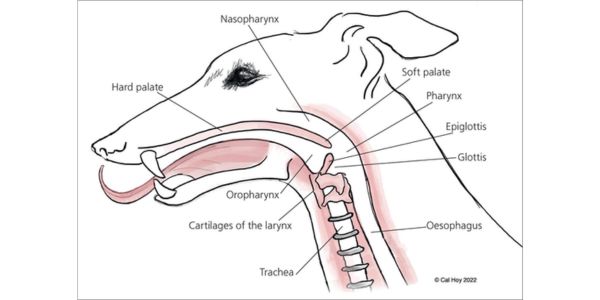
What are the symptoms of tracheal collapse?
The signs can start subtly and that is where many owners miss it. The classic symptom is a dry, hacking “goose-honking” cough. Many dogs are triggered by excitement, stress, heat or pressure on the neck.
OTHER WARMING SIGNS
- Coughing when excited, exercising or pulling on a lead.
- Gagging, retching or vomiting after coughing.
- Difficulty breathing or rapid breathing.
- Wheezing or noisy breathing.
- Low energy or exercise intolerance.
SERIOUS / EMERGENCY SIGNS
- Blue gums (cyanosis). Seek emergency care immediately!
- Fainting or collapse.
- Sudden worsening of coughing.
- Severe breating difficulty.
Why collars make tracheal collapse worse and what to use instead
A collar puts pressure directly on the airway. If that airway is already weak, you are effectively squeezing a collapsing tube. Switching to a well-fitted harness is one of the simplest and most impactful changes an owner can make.
WHAT TO LOOK FOR IN A HARNESS
- Sits on the chest, not the throat.
- Does not restrict shoulder movement.
- Does not compress the chest.
- Properly fitted: snug but not tight
WHAT TO AVOID
- Harnesses that cut across the shoulders.
- Designs that press into the chest or armpits.
- Poorly fitted designs that shift and rub.
THE GOAL
Remove pressure from the neck completely, without restricting natural movement.

When it gets severe: a real case
CASE STUDY: MIA THE YORKSHIRE TERRIER
At the University of Pretoria’s Onderstepoort Veterinary Academic Hospital, a Yorkshire Terrier named Mia developed grade IV tracheal collapse, meaning more than 75% of her airway was obstructed. She experienced severe breathing distress, blue gums and episodes triggered by excitement.
Specialists placed a tracheal stent (a small, mesh-like tube) inserted into the windpipe to hold it open and restore airflow. Following the procedure, Mia showed significant improvement in respiratory function and quality of life.
While tracheal collapse cannot be cured, interventions like stenting can be life-changing for dogs in advanced stages.
Treatments: Can it be fixed?
There is no cure, but the condition can be managed effectively, especially when caught early.
MILD TO MODERATE CASES
- Cough suppressants
- Anti-inflammatories
- Bronchodilators
- Weight managament
- Switching to a harness and lifestyle adjustments
SEVERE CASES
- Surgery to support the tracheal rings
- Tracheal stenting to hold the airway open
- Ongoing specialist monitoring
When should you see the vet?
See a vet as soon as possible if you suspect tracheal damage. The following signs indicate a potential emergency and require immediate attention:
- Blue and pale gums (cyanosis)
- Severe or sudden difficulty breathing
- Collapse or fainting
- Sudden significant worsening of coughin
TRACHEAL COLLAPSE IS NOT JUST “A COUGH”.
It is a structural problem with your dog’s airway and it can be life-threatening if ignored. But here is the good news: small changes make a big difference.
- Swap collars for well-fitted harnessess; eliminate pressure on the neck.
- Keep your dog at a healthy weight to reduce respiratory strain.
- Avoid anything that stresses the airway: excitement, heat, smoke and leash pulling.
The sooner the condition is managed, the better the outcome.
DISCLAIMER: This article is intended for educational purposes only and does not constitute veterinary medical advice. If you suspect your dog may have tracheal collapse or is experiencing breathing difficulties, please consult a registered veterinarian. In an emergency, including blue or pale gums, collapse, or severe breathing distress, seek immediate veterinary care.

FAQ Section
Q: What does tracheal collapse in dogs sound like?
A: The most recognised sound is a dry, harsh, honking cough, often described as resembling a goose honking. It tends to occur when your dog is excited, exercising, drinking water or feeling pressure on the neck. The sound is caused by air pushing through a narrowed, flattened airway. If you hear this in your dog, particularly a small breed, it is worth a veterinary assessment as soon as possible.
Q: Which dog breeds are most at risk of tracheal collapse?
A: Small breeds with an inherited weakness in tracheal cartilage carry the highest risk. Yorkshire Terriers, Chihuahuas, Pomeranians and Toy Poodles are most commonly affected. The condition can occur in any dog, but it is significantly more prevalent in toy and miniature breeds and symptoms typically appear in middle age or later, though some dogs show signs earlier.
Q: Can tracheal collapse in dogs be cured?
A: There is currently no cure for tracheal collapse in dogs, as it involves a structural weakness in the cartilage that cannot be reversed. However, it can be managed effectively. Mild to moderate cases are often controlled with medication, weight management and lifestyle adjustments such as switching to a harness. Severe cases may benefit from surgical intervention, including tracheal stenting, which can significantly improve quality of life.
Q: Is a collar dangerous for a dog with tracheal collapse?
A: Yes. A collar places direct pressure on the trachea, which is already weakened in a dog with tracheal collapse. This pressure can aggravate the condition, trigger coughing episodes and potentially accelerate deterioration. Veterinarians strongly recommend switching to a well-fitted harness that sits on the chest and removes all pressure from the neck. This applies to choke chains and slip leads as well.
Q: When is tracheal collapse a veterinary emergency?
A: Seek emergency veterinary care immediately if your dog shows blue or pale gums (cyanosis), collapses or faints, or experiences sudden severe difficulty breathing. These signs indicate the airway may be critically obstructed. A sudden and significant worsening of the honking cough also warrants urgent attention. Tracheal collapse can become life-threatening if left unmanaged, so early veterinary involvement is always recommended.
Sasha Wein, Broadcast investigative journalist and producer.
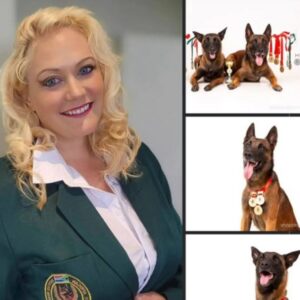
Sasha Wein is a broadcast investigative journalist and producer with a focus on human and animal rights stories. A former professional swimmer who competed internationally for both South Africa and Austria, Sasha is also an accomplished working dog handler. In 2021 she received her Springbok Colours (Green Blazer) after competing at the SA Working Dog Trials with her Belgian Malinois. Her canine Laybadene Asgard Valkyrie won the Detection Container Search category (Explosives), her male Malinois Laybadene Viper Sergeant placed second in the same category (Perlemoen/Others), and her team, PJ Kennels, won the National Championship Trophy. Sasha brings the same precision and commitment to her animal health writing as she does to everything she pursues.