
Your Pet Isn’t “Naughty.” It’s a Stress Response, Not a Spiteful Choice.
Why the “bad behaviour” myth is outdated and what science actually tells us.
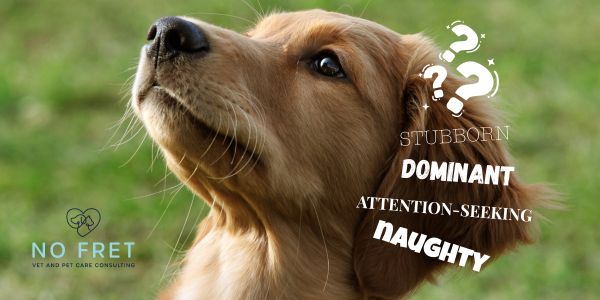
“Bad.” “Stubborn.” “Dominant.” “Attention-seeking.”
Whether I hear these labels from pet parents or fellow professionals, I have to work hard not to flinch. It’s not just that they’re unkind; it’s that they are, scientifically speaking, wrong. More importantly, these labels are the fastest way to erode the bond you have with your pet.
Modern behavioural science has evolved. We’ve moved past the idea that animals wake up with a plan to “be difficult” or challenge our authority. Instead, research shows that behaviour is simply the observable output of what is happening inside the brain and body.
In short: your pet isn’t choosing to be naughty. They are reacting to their internal state and the world around them.
The Biology of the "Blow-up"
All behaviour is mediated by the central nervous system. When an animal perceives a threat, or even just a moment of uncertainty, the brain doesn’t stop to ask for permission. It activates survival circuits.
This involves a high-speed internal relay race:
- The Amygdala: The “smoke detector” that flashes a red light for fear or danger.
- The HPA Axis: The system that floods the body with cortisol (the stress hormone).
- The Autonomic Nervous System: The engine that shifts the body into Fight, Flight, Freeze or Fawn/Fret.
These systems function beyond conscious control. When a dog “forgets” their training in a stressful moment, they aren’t being defiant; they are literally incapable of accessing the “thinking” part of their brain. Survival has taken the wheel.
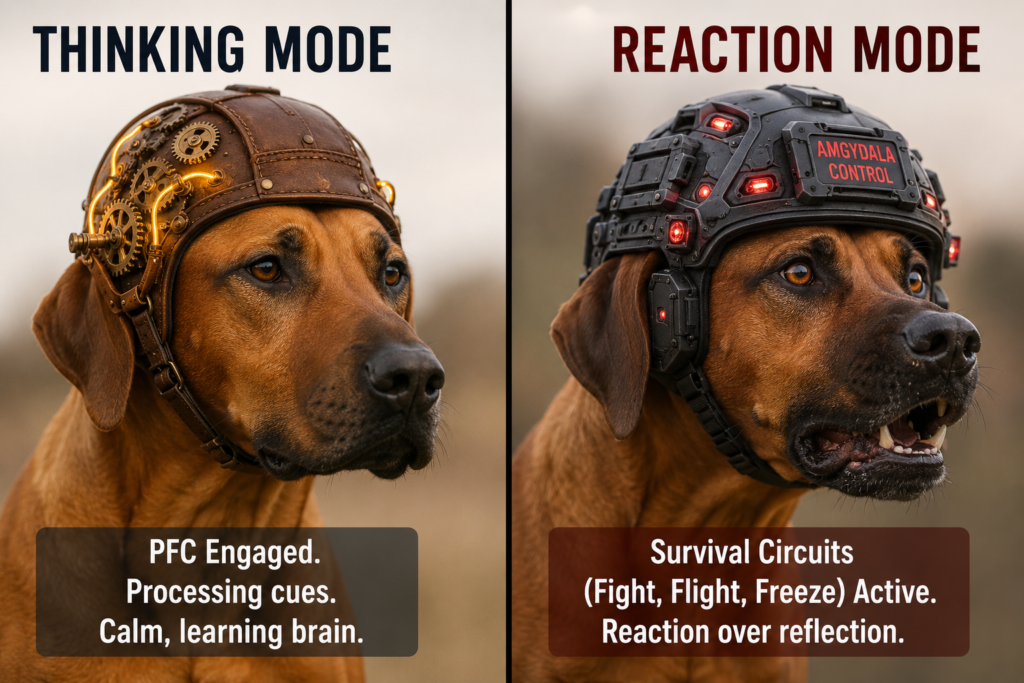
This image is AI-Generated and for illustrative purposes only.
The Danger of a Label
Labeling a cat who swats or a dog who lunges as “bad” isn’t just a matter of semantics; it dictates how we respond. When we see “defiance,” we tend to reach for:
- Punishment or “corrections.”
- Forced exposure (“They just need to get used to it”).
- Ignoring the early warnings.
While punishment might stop a behaviour in the moment, it’s like taking the batteries out of a smoke alarm while the kitchen is on fire. You haven’t fixed the problem; you’ve just silenced the warning. This leads to escalation, unpredictability, and a pet that no longer trusts their person.
What You're Actually Seeing: The Stress Spectrum
What we call “problem behaviour” is usually just a stress response that has been forced to get louder. Animals communicate in gradients:
- The Whispers (Early Signs): Lip licking, yawning or a cat’s flickering tail.
- The Shouts (Escalation): Barking, lunging, hissing or growling.
- The Silence (Shutdown): Freezing or withdrawal.
If we ignore the whispers, the animal is forced to shout to be heard. A dog who “suddenly” bites has often spent months trying to say “I’m uncomfortable” through subtle body language that went unnoticed.
The Health-Behaviour Connection
We cannot separate the mind from the body. Chronic stress doesn’t just “feel” bad; it has measurable physical consequences. It alters immune function, causes gastrointestinal issues, and changes pain sensitivity.
I see it constantly: behaviour is health, and health is behaviour. The same systems regulating your dog’s anxiety are influencing their digestion and longevity.
Moving Beyond "Alpha"Myths
The “dominance” model is perhaps the most persistent myth in the pet world. It’s based on outdated studies of unrelated wolves in captivity, a model that has been thoroughly debunked by modern wolf biology.
Today’s evidence supports a more sophisticated model: behaviour is emotion-driven, context-dependent, and shaped by safety.
From Judgment to Curiosity
When we stop judging and start wondering, the entire dynamic changes. Instead of asking “How do I stop this?”, we start asking, “Why is this behaviour happening right now?”
The goal of modern, science-based behaviour modification isn’t just to stop a bark; it’s to change how the animal feels. When we create safety, predictability, and use evidence-based tools (like desensitisation), the “bad” behaviours often melt away because they are no longer necessary for survival.
Final Thoughts
Your pet is not trying to challenge you. They are not being spiteful. They are simply responding, moment by moment, to how safe or unsafe they feel.
When we shift from judgment to curiosity, we don’t just change a behaviour, we change a life.


Ilse Fourie is a qualified and an internationally credentialed animal behaviour consultant and the founder of No Fret Vet and Pet Care Consulting in South Africa. As a Fear Free Elite Certified Professional, Ilse has dedicated her career to bridging the gap between clinical science and the lives of real pets. Her work focuses on a “whole-animal” approach, integrating stress physiology, gut health, and environmental factors to alleviate fear and anxiety. Whether she’s coaching veterinary teams or helping pet parents at home, Ilse’s mission is simple: to help animals feel safe and to empower their humans with the science-informed tools to keep them that way.