

Animals “Whisper” before they “Shout”
It often starts quietly.
A dog turns his head away when someone reaches for him. A cat’s tail begins to flick during stroking. A puppy freezes when picked up. A normally relaxed pet starts watching the room more carefully than usual.
Nothing dramatic has happened yet.
There is no bite, no scratch, no lunge, no growl. But communication has already begun.
Behaviour problems rarely appear “out of nowhere”. In most cases, the animal has been communicating discomfort, fear, pain, frustration or overwhelm for quite some time. The problem is not that they said nothing. The problem is that the early signs were subtle, misunderstood or accidentally ignored.
Animals usually whisper before they shout.
Behaviour is Communication
Modern behavioural science asks us to move away from the idea that animals are being “naughty”, “dramatic” or “spiteful”. Behaviour is not a moral failing. It is information.
For instance, a dog who moves away when a child approaches is communicating. A cat who flicks her tail when stroked is communicating. A puppy who freezes when picked up is communicating. A dog who scans the environment constantly on a walk is communicating. A cat who hides when visitors arrive is communicating.
The challenge is that many early stress signals are “quiet” and not dramatic. They do not look like “problem behaviour” yet. They look like avoidance, stillness, hesitation, displacement, or small changes in posture. Animals communicate much of their emotional state through body language and these signs may begin subtly before escalating into more obvious distress.
Subtle body language cues may include:
● moving away
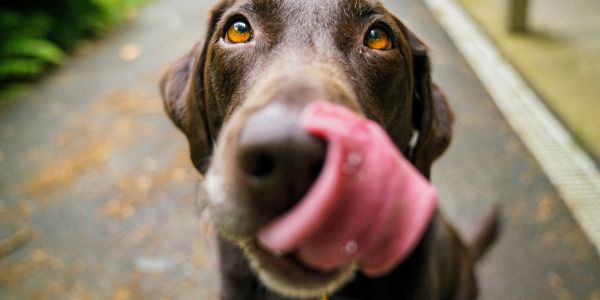
● lip licking
● yawning when not tired
● freezing
● turning the head away
● avoiding eye contact
● increased vigilance
● sudden stillness
● hiding
● tail flicking in cats
● refusing food
● becoming unusually clingy or withdrawn
These body language signs matter. They are often the animal’s first attempt to say: “I am not comfortable.”

The “Sudden” Bite is often not sudden to the animal
From a human perspective, the bite may seem sudden because it is the first sign we noticed. From the pet’s perspective, it may have been the final behaviour in a long sequence of communication.
Think of it as a ladder. At the bottom of the ladder, the pet may turn away, blink, lick their lips, move behind their person, or become still. If that works, they do not need to escalate.
But if those early signals are missed, ignored, punished or overridden, the pet may need to communicate more directly. And then the whisper becomes a shout.
A growl, hiss, swat, snap, lunge or bite is not the beginning of the conversation. It is often what happens when earlier communication has failed.
This is why suppressing warning signs can be so dangerous. If a dog is punished for growling, for example, the growl may disappear, but the underlying fear or discomfort has not. We have not changed the emotional state. We have simply removed one of the warning signals.
Stress changes the Brain and Body
When any animal (including humans) feels threatened, the body does not politely wait for logic. The brain and nervous system respond quickly. Stress systems activate. The animal becomes prepared for survival: fight, flight, freeze or fidget/fret. This is not stubbornness. It is biology.
A dog who cannot respond to a cue in a highly stressful moment is not necessarily “ignoring” you. A cat who swats when restrained is not “being nasty”. Their nervous system may have shifted into protection mode and once an animal is in this mode, learning becomes harder, emotional control becomes harder and the ability to make calm choices becomes harder.
This is why early intervention matters so much. If we wait until the animal is already shouting, we have missed the best opportunity to help.
Cats are Especially easy to Misunderstand
Cats are often misunderstood because their stress signals can be quiet, fast or easily mistaken for “attitude” or “cattitude”.
A stressed cat may freeze, crouch, hide, flatten or rotate the ears, tuck the tail close, flick the tail, dilate the pupils or become very still. In veterinary and home settings, feline distress may look less dramatic than canine distress, but that does not make it less real. Research and veterinary behaviour guidance repeatedly highlight that cats may show stress through freezing, crouched posture, withdrawal and subtle body language changes.
This is why I always encourage pet parents to take small changes seriously. A cat who “suddenly” scratches during handling may have been saying no for several minutes through tension, stillness, tail movement, ear position or attempts to leave. The goal is not to wait for the scratch. The goal is to notice the earlier “no”.
“He Knows he Shouldn’t do it” is not the same as “He Feels Safe”
One of the most common misunderstandings in behaviour is assuming that knowledge overrides emotion.
“He knows better.”
“She knows she is not allowed.”
“He has done this before without a problem.”
But behaviour is not only about what an animal has learned. It is also about how safe, well and capable they feel in that specific moment.
A dog may cope with one visitor but not another. A cat may tolerate handling on Monday but not after a painful procedure on Wednesday. A dog may walk calmly in a quiet street but lunge near a busy café.
Context matters. Health matters. Previous learning matters. Pain matters. Predictability matters. The environment matters. Behaviour is never just behaviour. It is the visible part of a much bigger internal picture.
Pain and Health must always be considered
When behaviour changes, we should never jump straight to training.
Pain, illness, sensory decline, hormonal changes, gastrointestinal discomfort, skin irritation, dental disease, arthritis, urinary issues and neurological changes can all influence behaviour. For example, a cat who starts avoiding the litter tray may be experiencing pain or urinary discomfort. A dog who becomes irritable around handling may be sore. A previously sociable animal who becomes withdrawn may not be “moody”; they may be unwell.
This is why behaviour and veterinary care should work together. Behaviour is health and health is behaviour.
Listening earlier is kinder and safer
The earlier we recognise discomfort, the more options we have. When we notice the whisper, we can pause. We can create distance. We can reduce pressure. We can change the environment. We can give the animal choice. We can teach coping skills gradually. We can seek veterinary or behavioural support before the problem becomes dangerous.
Early intervention is prevention. It protects the animal. It protects people. It protects the human-animal bond.
And importantly, it teaches the animal that communication works. When animals learn that subtle signals are respected, they often do not need to escalate.
What Shouls Pet Parents do?
Start by becoming curious. Instead of asking, “How do I stop this behaviour?”, ask: “Why is this behaviour happening now?” “What happened before it?” “What was my pet trying to avoid or access?” “Could pain, fear, frustration or overwhelm be involved?” “What subtle signs did I miss?”
Then, respond earlier: If your dog moves away, let them move away.
If your cat’s tail starts flicking during touch, pause.
If your pet freezes, do not push forward.
If your dog becomes hypervigilant on a walk, create distance.
If your animal refuses food in a situation where they normally eat, consider that they may be too stressed.
Final Thoughts
Behaviour problems rarely appear out of nowhere. Most often, animals have been speaking for a long time in the only language available to them: body language, movement, avoidance, tension, stillness and changes in behaviour. They whisper before they shout and our responsibility is to become better listeners. When we listen earlier, we do more than prevent “problem behaviour”. We help animals feel safer, we protect trust and we give them a voice before they are forced to raise it.

Ilse Fourie (CBCC-KA, DipCAB, CertCAB, MA)

Ilse Fourie is a qualified and an internationally credentialed animal behaviour consultant and the founder of No Fret Vet and Pet Care Consulting in South Africa. As a Fear Free Elite Certified Professional, Ilse has dedicated her career to bridging the gap between clinical science and the lives of real pets. Her work focuses on a “whole-animal” approach, integrating stress physiology, gut health, and environmental factors to alleviate fear and anxiety. Whether she’s coaching veterinary teams or helping pet parents at home, Ilse’s mission is simple: to help animals feel safe and to empower their humans with the science-informed tools to keep them that way.