
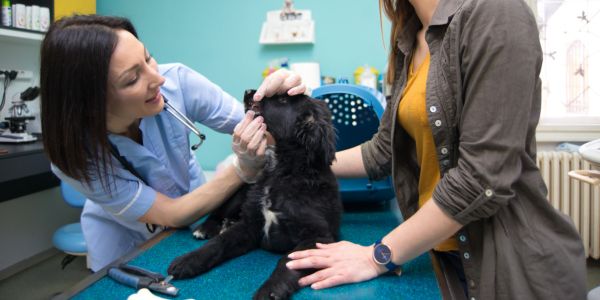
How do you book a vet appointment that's less stressful for your dog?
Planning a stress-free vet visit starts well before you arrive at the clinic, from how you book the appointment to what you pack and how you advocate for your dog once inside. Building on force-free foundations laid at home, this guide walks through practical steps for the waiting room and exam room so you and your dog can feel prepared, not just braced. Small, thoughtful choices at every stage can make a real difference to how your dog copes on the day.
In Part 1, we explored why veterinary clinics can be such a distressing environment for our dogs, from the overwhelming scents and slippery floors to the invasive nature of close handling. As Angelique de Kock explained, while vet visits are an unavoidable part of life for puppies and seniors alike, they don’t have to be a source of trauma. By understanding a dog’s “umwelt” and focusing on proactive preparation at home, such as “touch and treat” conditioning and breaking the negative association with car rides, we can help our pets stay below their stress threshold. Building on those foundational home-training skills, Angelique now returns in this April issue to provide a practical roadmap for the visit itself, ensuring you can advocate for your dog’s needs and manage the clinic environment for a calmer, safer experience.
Book proactively
When possible, choose quieter appointment times. You can call ahead to find out when this is and ask if your vet clinic offers low-stress or fear-free handling. There are a few ‘fear-free certified practices in South Africa. Request extra time if your dog struggles or consider booking a double appointment. Remember to let your vet clinic know if your dog is fearful, reactive or has a bite history.
Bring the right equipment. This can make a huge difference to how your dog feels at the vet. Bring lots of high-value treats, chews, toys and food toys like LickiMats or snufflemats. Remember to muzzle-train your dog if that is necessary. A muzzle, when introduced and trained properly, does not mean that you have failed or that you’re being cruel. It can actually help you feel less stressed as there is an added layer of safety.
The waiting room: Reduce stress
Waiting rooms are often the most stressful part of the visit but here are a few tips that could help make it easier.
Take a walk in the vet’s parking areas or wait in your car until the vet can see you (some vets might even come to your car to minimize your dog’s stress), or if you can’t, then sit away from doors and heavy foot traffic areas. Position your dog so that they are away from other animals and ideally focused on you. Use treats (or toys if appropriate) and try to do something fun.
If your dog loves tricks, this might be a good time to do their favourite tricks. My dog loves doing a nose touch and a spin, so I definitely do those. We have actually even done ‘scentwork’ while waiting to see the vet.
The key here is to avoid the things (triggers) that will stress out your dog while doing something fun for them to do. It is worth checking to see if your vet might have a side entrance that you could use instead of the main entrance. This is especially useful for reactive or aggressive dogs as it minimizes stress and keeps everyone safe.
Inside the exam room: Be an advocate for your dog
At the vet, you are your dog’s voice. You know what your dog’s normal behaviour looks like and what it doesn’t look like. Take note of those subtle signals like turning away, lip licking, yawning, stiffening or refusing food. If your dog growls, do not punish them. A growl is not bad behaviour. It’s just communication.
If your dog is struggling, ask for a quick pause or a break. If possible, ask if the procedure can be delayed or whether modified handling or medication could help.
Try not to use food as bribery
Food is one of the most useful tools during a vet visit, but it is important that it’s not used as a bribe. When you are training, the order in which you give treats is really important. You want to make sure that your treat follows the trigger.
Remember, if a dog is not eating, they may not be coping well and the plan needs to be adjusted.
Wants vs Needs
Not every procedure is urgent so ask yourself whether it is a want or a need? Needs include things like life-saving treatments, severe pain or urgent illness. In these cases, treatment takes priority over emotional comfort and feeling safe. This is where sedation, medication or modified handling could be used.
Wants are the routine procedures like nail trims, weighing or non-urgent exams. If your dog is already stressed, these may be postponed and trained for gradually. Doing this often leads to better cooperation in the long-run.
BUILD POSITIVE ASSOCIATIONS THROUGH ‘HAPPY VET VISITS’
A ‘happy vet visit’ is a proactive, short, pressure-free visit where no medical procedures occur. The goal is simple: arrive, receive treats and leave. For dogs who are already very fearful, happy vet visits may need to start much further away…
When your dog won’t enter the clinic, there are a few things you should do first:
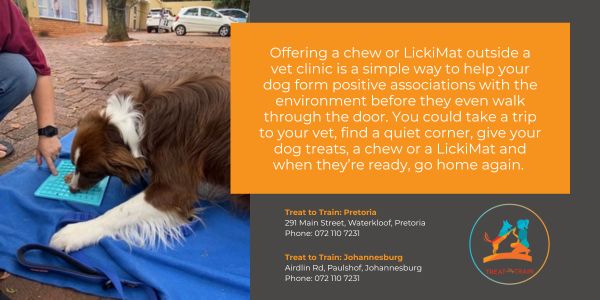
- Watch the clinic from the car while eating treats, especially if there is any movement in or out of the vet clinic. You could also provide a chew or LickiMat or a different kind of food puzzle or toy. The goal is just that you start making a positive association.
- Explore the parking lot and reward loads. If your dog is happy to leave the car, you could take them on a ‘sniffari’ around the quiet areas of the parking area. If there is anything that makes them feel a little unsure, immediately follow up with a treat. For example, if there is a sound from the clinic which scared your dog, immediately (be quick here!) give them a treat afterwards.
When training isn't enough
Some dogs need additional support. For dogs with intense fear, pain or traumatic histories, medication can be a humane and effective tool. It can reduce panic, which allows learning to occur (this is when you can train) and prevents further negative associations.
Medication always works best alongside behaviour support (not instead of it). Also make sure that you speak to your vet about which medications would work best and provide feedback if you observe any side effects so that you and your vet can find the correct medication.
Happier vet visits are built through preparation, collaboration and gradual training. We want to shift our focus from “getting it done” to “doing it well” and as stress-free as possible. How our dogs feel during veterinary care matters as well.
YOUR DOG DOES NOT NEED TO LOVE THE VET, BUT IDEALLY, THEY SHOULD FEEL SAFE ENOUGH TO COPE
In Part 1 of “Happier Vet Visits” Angelique explains why vet visits are scary and shares simple, force-free techniques that build calmer, happier vet visits.
You will find the article in the April 2026 Magazine. READ IT HERE
DISCLAIMER: This article is for educational purposes and reflects general force-free training guidance. It is not a substitute for individual veterinary or professional behavioural advice. Decisions about sedation, medication or modified handling should always be made in consultation with your veterinarian.

FAQ Section
Q: How do I book a vet appointment that’s less stressful for my dog?
A: Ask your vet clinic for quieter appointment times and let them know in advance if your dog is fearful, reactive or has a bite history. Consider requesting extra time or a double appointment. Some South African practices are fear-free certified and offer low-stress handling options, which is worth asking about directly.
Q: How can I make the vet waiting room less stressful for my dog?
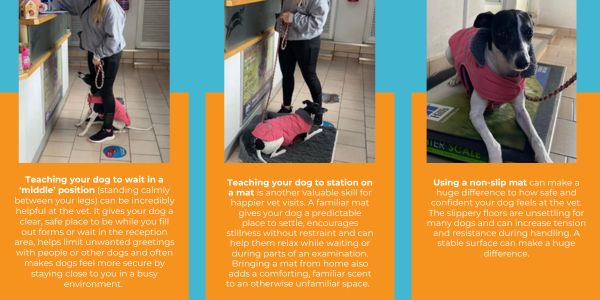
A: Wait in your car until the vet can see you or sit away from doors and busy foot traffic. Keep your dog focused on you with treats or a favourite trick and ask if a side entrance is available. Teaching your dog to station on a mat also helps them settle in unfamiliar spaces.
Q: Should I use a muzzle at the vet?
A: A properly introduced and trained muzzle isn’t a sign of failure or cruelty. It adds a layer of safety for everyone and can actually reduce your own stress during the visit. Muzzle training should be done gradually at home, well before it’s needed, so it doesn’t feel like a punishment.
Q: What should I do if my dog growls at the vet?
A: Don’t punish a growl. It’s communication, not bad behaviour and tells you your dog is uncomfortable. Ask for a quick pause or break and check whether the procedure can be delayed or handled differently. Advocating for a stress-free vet visit means listening to these signals, not overriding them.
Q: What is a “happy vet visit” and how does it help?
A: A happy vet visit is a short, pressure-free trip to the clinic where no medical procedures happen, the goal is simply to arrive, get treats and leave. This builds positive associations with the environment over time and for very fearful dogs, it may need to start even further away, like watching the clinic from the car.
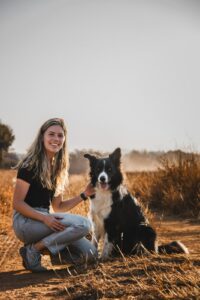
I’m Angelique, an animal behaviour consultant, trainer, and founder of Treat to Train. My journey into animal training began in 2017 with my first puppy (a greyhound) and quickly grew into a lifelong passion. After being invited to assist with training classes, I discovered just how powerful positive, science-based training can be in transforming behaviour and strengthening the bond between dogs and their humans. This passion led me to establish Treat to Train, which has since grown into a wonderful team of trainers across Pretoria and Johannesburg. We offer both in-person and online training.